Vincent van Gogh’s name conjures images of a man whose creativity blazed as fiercely as the colors on his canvases. His story isn’t just about art—it’s a saga of relentless passion, emotional intensity, and a vision that continues to captivate nearly 135 years after his passing. Though his life was peppered with hardship and isolation, Van Gogh’s prodigious output, especially during the last decade of his existence, marks him as a titan of artistic innovation. From his vivid depictions of sunflowers to the swirling cosmos of his timeless “Starry Night,” Van Gogh’s work embodies the restless spirit of an artist driven to translate every nuance of life’s beauty and agony onto canvas. This enduring legacy beckons not only art aficionados but anyone fascinated by the triumph of human expression amidst adversity.
Emerging from a modest background in the Netherlands, Van Gogh’s journey from late-blooming painter to a revered figure in art history is as compelling as his brushstrokes. His life was intertwined with a rich tapestry of emotional challenges and groundbreaking stylistic leaps that paved the way for modern artistic movements. The intensity of his personal battles only magnified his creations’ depth, demonstrating that true genius often walks hand-in-hand with turbulence. As we explore the multiple dimensions of Van Gogh’s prolific genius, we uncover not merely a painter but a visionary whose work still pulses with the wild energy of his restless soul.
Van Gogh’s Early Life and Emerging Artistic Drive
Born in 1853 in the quiet town of Zundert, the Netherlands, Vincent van Gogh’s initial years were steeped in the conventional structure of a religious household, where discipline and quiet reflection were the norm. Initially, art did not dominate his ambitions; instead, he dabbled in various careers including working as an art dealer and a missionary, reflecting a period of searching rather than certainty.
His decisive pivot to painting only occurred in his late twenties, a testament to the idea that creativity cannot be rushed or scheduled. This unconventional beginning meant Van Gogh was mostly self-taught, allowing him the freedom to break from artistic traditions. His nascent style drew heavily from the natural world and the somber tones of Jean-François Millet’s peasant scenes, which infused his early compositions with a sincere, earnest tone.
Key aspects of Van Gogh’s early artistic development include:
- Self-taught passion: Without formal training, Van Gogh developed a raw, emotive style.
- Inspiration from nature and common folk: His subjects often centered around rural life and humble people, emphasizing everyday dignity.
- Late blooming artist: Van Gogh’s career as a painter began at an age when many artists have already settled into their methods.
- Influence from predecessors: Influenced by the likes of Millet and Rembrandt, he merged respect for tradition with an urge to innovate.
- Relentless experimentation: His early works show a growing confidence in color and brushwork that foreshadowed his later masterpieces.
His early years reveal a fundamental lesson for creative souls everywhere: true artistry often requires patience, resilience, and the courage to follow an uncharted path.
Van Gogh’s Mental Health: Turmoil and Creative Burst
Van Gogh’s mental health remains a focal point for understanding his artistic output and personal narrative. Battling severe depression, anxiety, and possibly bipolar disorder or temporal lobe epilepsy, his psychological struggles profoundly influenced his lifestyle and work rhythm. The famous incident in which he severed part of his own ear after a confrontation with Paul Gauguin isn’t just a dramatic episode; it symbolizes the intense friction between his inner turmoil and creative genius.
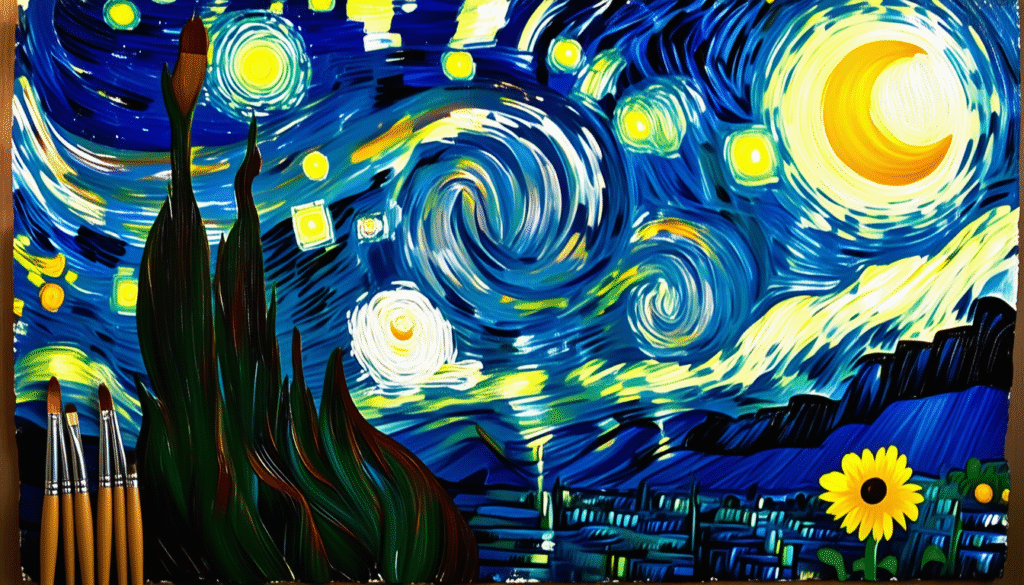
Despite—or perhaps because of—these challenges, Van Gogh’s creativity flourished in cycles of profound productivity followed by periods of incapacitation. His ability to transform volatility into vivid, emotive paintings is exemplified in works like “Starry Night,” created during his stay at the Saint-Paul-de-Mausole asylum. Here, the turbulent sky mirrors the tempest inside his mind, vibrant with swirling energy but framed within the confines of an institutionalized existence.
Van Gogh’s emotional and psychological experiences contributed to his artistry in several ways:
- Expressive use of color: Blues, yellows, and greens convey moods rather than reality.
- Dynamic brushwork: Vigorous strokes express urgency and emotional intensity.
- Symbolism and metaphor: His paintings often represented a dialogue between his experiences and the universal human condition.
- Periods of heightened creativity: Intense emotional states triggered bursts of prolific creation.
- Art as self-therapy: Painting served as a vital outlet for emotional release and understanding.
Van Gogh’s story teaches that personal afflictions can sometimes serve as catalysts for remarkable artistic revelations, underscoring the intimate connection between a creator’s psyche and their output.
Innovations in Art: Van Gogh’s Signature Style and Revolutionary Techniques
Van Gogh shattered artistic norms with his distinctive blend of color vibrancy and stroke dynamism. His palette, rich with saturated yellows and deep blues, pulsed with life — his so-called Palette Prodigy talent gave rise to visuals that seemed almost to move under the viewer’s eye. Abandoning the photographic accuracy prized by earlier artists, Van Gogh focused on emotion and sensation, pioneering a style that would influence movements like Expressionism and Fauvism.
His iconic paintings such as “Sunflowers,” a series bursting with Sunflower Inspirations, reflect how he could imbue simple objects with tremendous warmth and vitality. Meanwhile, canvases like “The Bedroom” showcase his ability to evoke mood with bold color choices and surprisingly subtle composition. His landscapes, bristling with energy, seemed to breathe and pulse with the life of the world itself — the Impressionist Essence re-imagined with an intensity uniquely his own.
Major elements defining Vincent’s vision and style include:
- Bold color contrasts: Vibrant juxtaposition of complementary shades that captivate the eye.
- Expressive brush strokes: Short, whip-like strokes layered to create both texture and movement.
- Subject elevation: Ordinary scenes transformed into emotional and symbolic statements.
- Nature as muse: Trees, fields, and skies portrayed with a passionate reverence.
- Emotional authenticity: The ability to convey raw feeling without sacrificing artistic finesse.
This innovative approach cemented Van Gogh’s reputation as an Easel Genius who redefined what painting could achieve, asserting mood, movement, and spirit over realism.
The Power of Persistence: Van Gogh’s Prolific Output Amid Adversity
One of the most staggering aspects of Van Gogh’s career is the sheer volume of work he produced within roughly a decade. Over 2,100 artworks—including nearly 860 oil paintings—emerged despite his perpetual financial struggles, social isolation, and health problems. His relentless drive to paint is a masterclass in perseverance, a relentless pursuit of his vision even when recognition was absent and hardship was constant.
Behind this tenacity was also the unwavering support of his brother Theo. Theo’s patronage, emotional encouragement, and practical aid formed the backbone of Vincent’s artistic endeavor. Their brotherly correspondence offers a rare glimpse into the daily challenges and breakthroughs of an artist wholly devoted to his craft.
Van Gogh’s persistence illustrates key lessons for creative professionals and dreamers alike:
- Commitment over recognition: Artistic value is not reliant on immediate acclaim.
- Volume breeds mastery: Continuous creation sharpens skill and expands possibilities.
- Support systems matter: Emotional and financial backing can be critical.
- Transformation through effort: Struggles can fuel dedication and resilience.
- Legacy beyond lifetime: Impact often crystallizes posthumously.
Van Gogh’s life reminds us that the true essence of genius isn’t fleeting brilliance, but enduring commitment, producing Masterpiece Moments against all odds.
The Influence of Relationships on Van Gogh’s Art and Life
Relationships were both a source of inspiration and conflict within Van Gogh’s turbulent existence. Central to his story is Theo, whose steadfast support preserved Vincent’s creative flame during his darkest days. Their prolific letter exchange reveals a profound emotional dependency, intellectual companionship, and practical assistance that formed the foundation for Vincent’s work.
Conversely, Van Gogh’s bond with Paul Gauguin was a rollercoaster of friendship and rivalry, ultimately ending in tragic tension but sparking artistic exchange. This volatile interaction highlights how human connections can simultaneously challenge and enrich creative visions.
Romantic and social isolation compounded Van Gogh’s struggles, but even fleeting connections found their way into his canvas. Portraits such as Portrait of Dr. Gachet display complex emotional textures, a testament to Van Gogh’s ability to capture the multifaceted nature of human bonds.
Important dynamics shaping his artistry through relationships include:
- Emotional sustenance from family: Theo’s continuous encouragement.
- Creative friction with peers: Tensions and collaborations with fellow artists.
- Romantic yearnings: Often unfulfilled, adding melancholy depth.
- Interpersonal isolation: Feeding psychological challenges but also creative solitude.
- Depiction of human complexity: Portraiture showing empathy and vulnerability.
The interplay of these relationships was crucial in shaping the emotional landscape that made Vincent’s Vision so compelling and intimate.