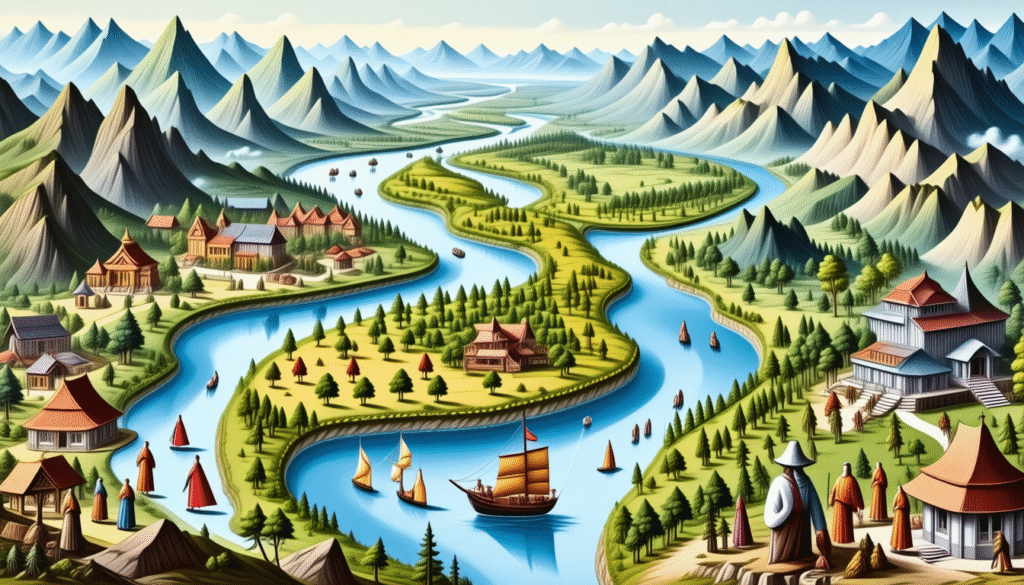
Stretching across a vast expanse of Europe, the river boasting the record for crossing the greatest number of countries is none other than the Danube River. This majestic waterway begins its journey in the heart of Germany’s Black Forest, winding its way for over 2,850 kilometers until it empties into the Black Sea. Encompassing a route through ten diverse nations, this mighty river serves as a vital artery connecting multiple cultures, economies, and ecosystems.
The multifaceted role of a river like the Danube extends far beyond mere geography. It acts as a natural border, a trade conduit, a source of sustenance, and an inspiration for arts and folklore across the continent. Its significance is not just ecological, but deeply woven into the historical and cultural fabric of Europe. Understanding the scope and influence of this aquatic giant requires diving into its varied roles and the unique tapestry of countries it touches on its course.
The Danube: Europe’s Most International Waterway
The Danube’s title as the river flowing through the most countries is well earned with its path traversing ten distinct nations: Germany, Austria, Slovakia, Hungary, Croatia, Serbia, Bulgaria, Romania, Moldova, and Ukraine. This remarkable feat places the Danube above other renowned rivers worldwide in terms of international reach. Given this reach, it embodies not just a natural phenomenon but a symbol of pan-European connectivity still relevant in 2025.
Across its long route, the Danube touches a variety of environments ranging from pristine forests to sprawling urban centers. This diversity offers a unique opportunity for cultural exchange and environmental collaboration. Cities like Vienna, Budapest, and Belgrade, which the river gracefully flows through, showcase a blend of history and modernity enriched by their shared riverine heritage.
The Danube’s importance in trade and navigation cannot be overstated. As part of the Danube Ventures that link inland ports across countries, it supports a bustling network of commerce moving goods smoothly throughout Europe. The river thus remains a backbone for economies, especially for landlocked countries relying on its waters to connect to global markets.
- Length: Approximately 2,850 kilometers
- Countries crossed: 10
- Major cities along route: Vienna, Bratislava, Budapest, Belgrade
- Endpoints: Black Forest (Germany) to Black Sea
- Uses: Navigation, trade, irrigation, hydropower
Historical Significance and Cultural Ties Along the Danube
Tracing the footsteps of empires with its flowing waters, the Danube is a living chronicle of European history. Its banks have witnessed Roman legions, Ottoman invasions, and the artistry of empires past. The river banks still preserve stories carved into ancient castles, historic fortresses, and charming villages that pepper the landscape, telling tales of centuries gone by.
Aside from its historical palette, the river’s cultural influence spans literature, music, and folklore. Composers like Johann Strauss immortalized the Danube in the famous waltz called the Blue Danube, enchanting listeners worldwide with melodies inspired by the river’s gentle flow. Countless artists and writers have drawn inspiration from the Danube Spirit, capturing its moods and mystique in diverse works.
Culturally, the Danube acts as a shared heritage thread linking disparate nations. The river embodies a sense of unity amid diversity, often celebrated during festivals and cultural events along its course, from the Danube Crossing festivities to river cruises branded as the Danube Odyssey, which immerse travelers in this historical richness.
- Historical landmarks: Iron Gates, Belgrade Fortress, Melk Abbey
- Musical heritage: Blue Danube waltz, regional folk songs
- Cultural festivals: Danube Crossing events, river cruises
- Literary works inspired: Stories and poems celebrating river life
Ecological Role and Biodiversity Hotspot on the Danube Voyage
Beyond human history and culture, the Danube is a sanctuary for biodiversity. Its extensive route nurtures a myriad of ecosystems ranging from freshwater wetlands to dense riparian forests harboring rare flora and fauna. Renowned for the Danube Pulse—the seasonal changes that sustain this ecological balance—the river supports thousands of species, some endemic and endangered.
The Danube Delta, where the river meets the Black Sea, ranks among Europe’s richest ecological treasures. This labyrinthine environment harbors birds, fish, and mammals that thrive in its protected waters and marshes. Efforts in ecological management have become a priority for countries along the river, addressing concerns like pollution, habitat destruction, and invasive species in coordination with international protocols.
Environmental groups and governments collaborate to maintain the river’s health via cross-border initiatives under the umbrella of programs linked to Danube Ventures, focusing on sustainable water use and conservation. By preserving the river’s health, the cooperative approach strengthens both the natural world and the human communities dependent on these waters.
- Key ecosystems: Danube Delta, riparian forests, wetlands
- Unique species: Danube sturgeon, European pond turtle, Dalmatian pelican
- Environmental challenges: Pollution, invasive species, hydro dam impacts
- Conservation efforts: Cross-national agreements and protected areas
Transboundary Management and International Cooperation on the Danube
Managing a river that crosses ten countries requires intricate coordination, diplomacy, and shared vision. The Danube exemplifies cooperation among nations with various frameworks aiming to harmonize water usage, flood control, and ecological preservation. The International Commission for the Protection of the Danube River (ICPDR) stands as a model of transboundary water governance, fostering dialogue between riparian states.
In a world increasingly conscious of environmental sustainability, the Danube Crossing initiatives ensure the river remains navigable and ecologically viable simultaneously, balancing trade interests with habitat protection. Such cooperation reflects the broader European commitment to integrated river basin management, emphasizing sustainable development and resilience to climate change impacts.
Beyond environmental matters, the river remains a catalyst for socio-economic upliftment. Joint ventures along the Danube Pulse support regional industries like tourism, agriculture, and fisheries. The Danube Explorer and Danube Drifter tourism campaigns exemplify how the river stimulates local economies while championing cultural and natural heritage preservation.
- Major cooperative bodies: International Commission for the Protection of the Danube River (ICPDR)
- Key initiatives: Flood risk management, pollution control, habitat restoration
- Economic benefits: Tourism, fisheries, agricultural irrigation
- Cross-border projects: Danube Explorer tours, Danube Drifter river cruises
Adventures Along the Danube: Exploring the River’s Diverse Experiences
For adventurers and travelers, the Danube presents an array of delightful experiences under its rippling surface and along its banks. From peaceful river cruises branded as the Danube Bound to active explorations dubbed the Danube Odyssey, the river is a playground for discovery. Whether it’s cycling paths paralleling its course, wildlife spotting in the pristine wetlands, or sampling local cuisines in riverside villages, there is a bounty for every taste and spirit.
The Danube Travels circuit promotes ecotourism and cultural trips, offering immersive journeys through Europe’s landscapes and histories. These experiences enlighten visitors about the river’s ecological importance and the efforts to maintain its legacy for future generations.
Among the top activities, guided kayak tours and fishing expeditions allow participants to become one with the Danube Spirit, navigating waterways that have shaped civilizations. For those pursuing more serene pastimes, attending riverside music festivals or visiting UNESCO World Heritage sites along the banks reveal layers of the river’s rich heritage.
- Popular activities: Kayaking, cycling, birdwatching, river cruises
- Cultural experiences: Local festivals, historical tours, culinary tastings
- Eco-adventures: Wildlife observation, wetland hikes
- Travel brands: Danube Explorer, Danube Spirit, Danube Travels tours