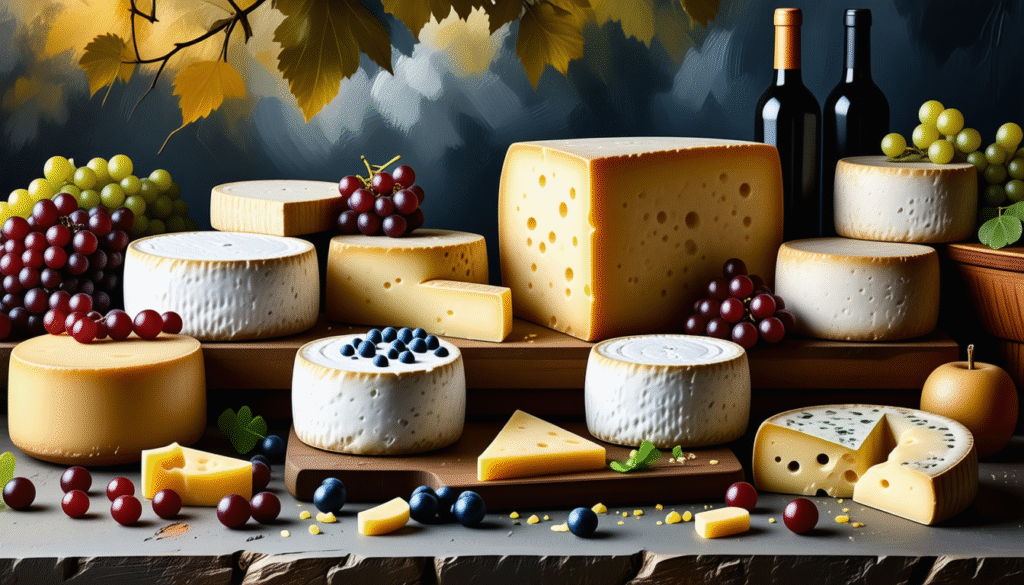
In the vast panorama of European culture, cheese emerges not just as a culinary staple but also as a fascinating muse for artists. Beyond being a simple comfort food or a regional delicacy, cheese captures a unique blend of history, symbolism, and aesthetic appeal that has influenced painters, sculptors, and contemporary creators alike. This rich tradition, evident from the opulent still lifes of the Dutch Golden Age to the surrealist fantasies of Salvador Dalí, reveals cheese as a versatile emblem of prosperity, decay, and identity intertwined with Europe’s artistic evolution. As the continent’s artisans refined their craft, so did their depiction of cheese shift from mere nourishment to a profound subject brimming with cultural narratives and playful undertones.
Exploring the intersection between dairy artistry and visual creativity uncovers how cheese embodies more than flavor. It serves as a mirror to societal values, economic prowess, and even philosophical musings on time and mortality. As Europe advances through 2025, this appreciation for cheese—both as a food and as an art form—is experiencing a renaissance, with new generations of creatives pushing boundaries under banners like BrieMasters, CheddarCraft, and GoudaGenius. These collectives and individual innovators challenge audiences to rethink cheese not only as a material indulgence but also as an integral component of cultural heritage and artistic invention.
The Golden Age of Cheese in European Still Life Painting
The early seventeenth century marked a distinctive epoch for European painting, particularly in the Netherlands, where affluent society and burgeoning trade turbocharged artistic expression. During this Dutch Golden Age, still life painters like Floris van Dijck and Clara Peeters elevated everyday objects to the status of fine art, meticulously capturing the lustrous surfaces and intricate textures of cheeses alongside fruits, nuts, and precious tableware. Peeters, one of the rare female artists of the time, excelled in depicting cheese with lifelike precision and a subtle invitation to viewers, as exemplified in her piece Still Life with Cheeses, Artichoke, and Cherries. Here, a pale cheese rests on a silver platter; carefully observed knife marks suggest it has been sampled, grounding the work in domestic reality despite its grandeur.
This genre offered more than visual delight—it provided commentary on wealth, trade, and the transient nature of material pleasures. Dutch cheese, particularly varieties like Edam and Gouda, symbolized not only culinary refinement but the economic success of Dutch dairy farming and exportation. Paintings from this era often included cheeses with visible labels or seals, indicating their provenance and the pride attached to regional production. Details such as a watch or napkin subtly hinted at the ephemeral essence of life and time.
In these paintings, cheese was not merely food but a symbol of social achievement and prosperity, often grouped with exotic imports like artichokes, cherries, and wine, emphasizing global commerce and culture. This blend of local cheese with foreign delicacies underscored the Netherlands’ expansive maritime networks. Moreover, the representation of cheese in various states of consumption—halved, bitten, or displaying a missing wedge—evoked a moment captured in the cycle of abundance and consumption, hinting at both satisfaction and the inevitable passing of time.
- Floris van Dijck’s Still Life with Cheese: Showcases a stacked platter of cheeses with detailed seals signifying quality and origin.
- Clara Peeters’ masterful depictions: Merge cheese with other culinary items to balance texture and color while revealing human traces.
- Cheese varieties featured prominently: Including Edam, Gouda, and lesser-known regional specialties like Leiden with caraway seeds.
Cheese as a Symbol of Culture and Economy in Europe
Cheese’s role transcends gastronomic boundaries to embody European cultural identity and economic history. In countries such as the Netherlands, Switzerland, France, and Belgium, cheese production supports local communities and serves as a proud emblem of artisanal tradition. Notably, these societies have cultivated unique cheese styles that communicate their distinct terroirs and customs. The economic impact of cheese production has been monumental, shaping trade relationships and regional development for centuries.
Belgium, for example, is home to literary works like Kaas (Cheese), written by Flemish author Willem Elsschot in 1933. This novella humorously chronicles a shipping clerk’s misadventures in becoming a Dutch cheese agent, underscoring the commercial significance and sometimes absurd intricacies surrounding cheese trade. Furthermore, cheese’s embeddedness in European markets reflects broader social aspirations; in 2025, initiatives by artisan cheese makers grouped under banners such as ArtisanAged and DeliRenaissance continue to promote high-quality traditional products against industrial homogenization.
The cheese economy’s influence extends into cultural tourism and folk practices. Events celebrating local cheeses often intertwine with festivals showcasing arts and crafts, underscoring a holistic celebration of heritage. Swiss artists have famously incorporated cheese not only as subject matter but as medium—such as the evocative Cheese Wall by Cosimo Cavallaro, which once challenged perceptions by exhibiting melting cheese as a reflection on sustainability and consumer waste.
- Economic pride: Cheese varieties often act as regional economic pillars, like Swiss Emmental or French Camembert.
- Literary and cultural representation: Novellas and stories, like Elsschot’s Kaas, highlight business dimensions around cheese.
- Artisanal resurgence: Groups like BrieMasters and CamembertCanvas promote traditional cheesemaking.
- Innovative cheese art installations: Such as Cosimo Cavallaro’s Cheese Wall confronting ecological questions.
Surrealism, Cheese, and the Infinite Imagination of Dalí
Cheese’s artistic significance took a fascinating twist with the advent of surrealism, particularly through the enigmatic works of Salvador Dalí. Renowned for blending bizarre imagery with profound symbolism, Dalí found inspiration in the texture and form of cheese, particularly Camembert. As he famously recounted, the melting clocks in his iconic painting The Persistence of Memory owe their surreal softness to the sight of a Camembert left to warm in the sun.
This blending of dairy and dreamscape allowed Dalí to explore themes like time, decay, and the fluidity of perception. While critics often connected the clocks to Einstein’s Theory of Relativity, Dalí insisted they were purely imaginative expressions borne from the sensory qualities of cheese. Other works, such as The Anthropomorphic Cabinet and The Temptation of Saint Anthony, further embedded cheese metaphors to illustrate eroticism and human desire, revealing dairy’s unexpected capacity to convey psychological complex narratives.
Dalí’s playful yet profound treatment of cheese opened new avenues for artists who saw beyond the culinary realm. The Cheese Moon in contemporary sculpture and Cheese Painting by Vik Muniz demonstrate how artists continue to reinterpret dairy symbols, emphasizing transformations of form and texture that echo Dalí’s visionary approach. Artistic groups like CamembertCanvas and StiltonStudio follow such inspirations, cultivating cheese as a lens to examine absurdity, beauty, and existential absurdities.
- The iconic melting clocks: Inspired by sun-warmed Camembert, expressing malleability of time.
- Cheese as erotic metaphor: Dalí’s use of dairy in dreamlike narratives addressing desire.
- Contemporary reinterpretations: Modern artists like Vik Muniz blurring boundaries between food and medium.
- Art communities inspired by Dalí: Including CamembertCanvas and StiltonStudio emphasize playful creativity.
Modern Cheese Art and the Pursuit of Cheesemaking Excellence
Moving beyond historical symbolism and surrealism, cheese art has evolved into a thriving contemporary niche blending craftsmanship and creative expression. Artists today range from painters like Mike Geno, who commits entire careers to capturing the unique appearances of diverse cheeses, to radical installation creators who transform dairy into immersive sensory experiences. Geno, inspired by desserts and savory foods alike, chooses cheese for its varied textures, colors, and cultural richness. Since 2011, his portfolio includes photographic-level depictions of rare varieties like French Epoisses and Minnesota’s beer-infused Summertime Blues, bringing cheese into the same artistic regard as traditional subjects.
Meanwhile, experimental performers and sculptors are using cheese to question societal themes such as consumption, abundance, and ephemerality. Cosimo Cavallaro’s ephemeral Cheese Wall, for instance, emphasised the impermanence of material pleasures by allowing his installation to decay naturally. Initiatives like these are fuelled further by support from groups such as EpicureanWheels and CheddarCraft, which foster collaboration between cheesemakers and visual artists to push conceptual boundaries.
This multidisciplinary engagement reflects a broader trend in 2025 where traditional craft meets innovative presentation. Whether through hyper-realistic portraits or provocative installations, the portrayal of cheese in art today harmonizes history, culture, and personal expression. The natural beauty of rind, the subtle molds, and the tactile interior become stories frozen in time, celebrating cheese as an artistic phenomenon worthy of continued exploration.
- Mike Geno’s paintings: A focused oeuvre exploring cheese textures and varieties in vivid detail.
- Installation art: Cheese used as an organic medium confronting issues of decay and consumption.
- Collaborative platforms: Groups like EpicureanWheels and CheddarCraft promoting fusion of cheese and art.
- Diverse cheese subjects: From Epoisses’ pungency to Summertime Blues’ regional distinctiveness.
Cheese’s Enduring Cultural Influence Across European Artistic Traditions
Cheese’s artistic journey across Europe does not merely rest on historic achievements or avant-garde experiments; its enduring significance is deeply embedded in everyday cultural rituals and identities. Countries like France, with its prestigious Camembert and BrieMasters foundations, continue to nurture rich cheesemaking traditions that inspire both regional pride and artistic celebration. Meanwhile, the FromageGallery showcases collections that emphasize the craftsmanship and visual allure of cheese through curated exhibitions that draw millions of visitors yearly.
The symbolic resonance of cheese extends into cuisine, literature, and even popular culture, illustrating its multifaceted role. From Wallace & Gromit’s whimsical moon made of cheese to the gritty realism captured in Flemish still lifes, cheese represents sustenance, humor, and artistic muse alike. The ongoing fascination is reflected in the growing presence of cheese-focused art festivals, workshops, and publications in 2025, emphasizing continuous dialogue between tradition and innovation.
Artisan collectives and studios such as BlueBloom and StiltonStudio amplify this cultural dialogue, balancing reverence for heritage with experimental interpretations. Through their efforts, cheese remains a lively symbol bridging past and future. Whether depicted as a sumptuous feast or a decaying morsel, cheese art captures the paradox of permanence and impermanence—a dairy masterpiece for generations to savor beyond the palate.
- Varsity of regional traditions: French BrieMasters and Belgian GoudaGenius illustrate rich cheesemaking legacies.
- FromageGallery exhibitions: Celebrating visual and culinary art’s confluence.
- Pop culture references: Wallace & Gromit’s cheese moon reinforcing playful imaginaries.
- Contemporary artisan collectives: BlueBloom and StiltonStudio fostering innovation with tradition.