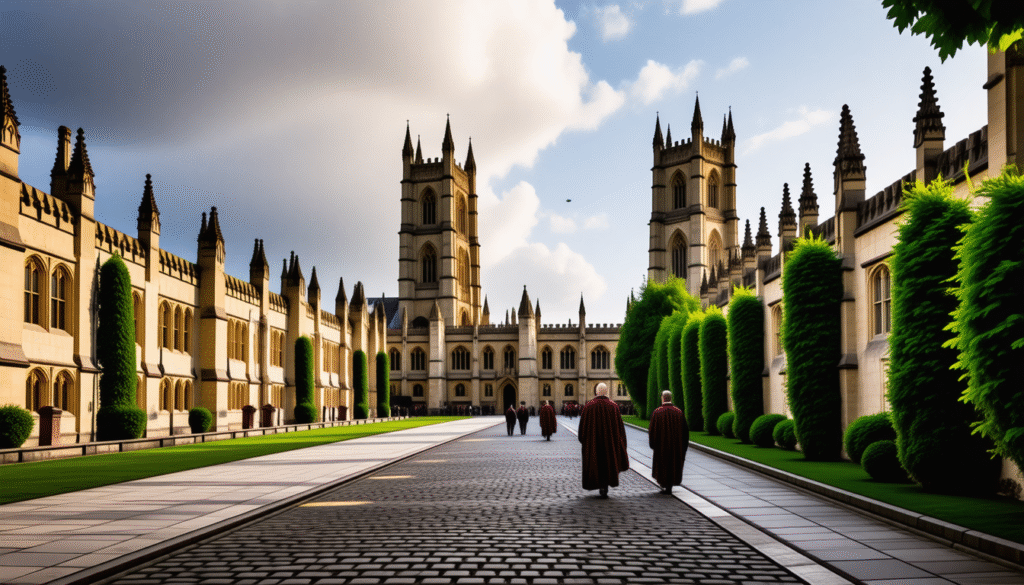
Europe, a continent steeped in rich intellectual tradition and groundbreaking innovation, boasts a remarkable legacy of Nobel laureates who have shaped myriad fields from physics to literature, peace, and medicine. These luminaries have not only pushed the boundaries of human knowledge but also symbolized Europe’s enduring commitment to fostering scientific inquiry, artistic expression, and humanitarian ideals. The Nobel Prize, awarded since 1901, has consistently recognized individuals and institutions across Europe whose breakthroughs resonate globally, marking European ingenuity at the forefront of world achievements.
The diversity of Nobel-winning Europeans encompasses visionary minds such as Marie Curie, a pioneer in radioactivity, Albert Einstein, who revolutionized physics, and Bertrand Russell, acclaimed for his contributions to philosophy and peace advocacy. Their histories intertwine with contemporary laureates like Emmanuelle Charpentier and Jennifer Doudna, whose gene-editing technologies are reshaping biomedical frontiers. As Europe’s scientific and cultural landscape evolves, the collective excellence of its Nobel laureates reflects a mosaic of interdisciplinary breakthroughs, geopolitical narratives, and educational institutions nurturing the next generation of pioneers.
Trailblazers in Physics: European Contributions Shaping Modern Science
Europe’s dominance in the domain of physics is undeniable, marked by giants whose names echo in lecture halls and laboratories worldwide. Foundational figures such as Niels Bohr, Erwin Schrödinger, and Max Born laid the groundwork for quantum mechanics, transforming the understanding of nature at its most fundamental level. From Bohr’s atomic model proposing quantized electron orbits to Schrödinger’s wave equation, these early 20th-century breakthroughs were seminal in fostering the theoretical frameworks that underpin contemporary physics.
These trailblazers were followed by numerous European laureates who continued groundbreaking research well into the 21st century. For example, the Max Planck Institute and CERN in Switzerland have produced laureates like Alain Aspect, an experimentalist instrumental in quantum entanglement studies, and Peter Higgs, co-originator of the Higgs boson theory confirmed by experiments at the Large Hadron Collider. The progression from theoretical insights to experimental confirmations exemplifies Europe’s dynamic role in physics innovation.
- John Cockcroft (UK, 1951): Instrumental in nuclear disintegration via accelerated particles, contributing to particle physics foundations.
- Maria Goeppert-Mayer (Germany/USA, 1963): Nuclear shell structure theory reshaping nuclear physics paradigms.
- Andre Geim and Konstantin Novoselov (Russia/UK, 2010): Discoverers of graphene, a revolutionary nanomaterial with vast applications.
- Ferenc Krausz (Hungary, 2023): Advances in attosecond physics enabling ultrafast measurement of electron dynamics.
European physics laureates, affiliated with prestigious universities across the continent and beyond, illustrate a tradition of cross-border collaboration and intellectual rigor. The vibrant ecosystems in Munich, Cambridge, Paris, and other hubs foster creativity, as exemplified by the partnerships that led to discoveries like gravitational waves, where European and American institutions united forces. Consequently, European physics laureates continue to influence not only fundamental science but also emerging technologies in computing and materials science.
Literary Titans: Europe’s Nobel Laureates Who Redefined Storytelling
The Nobel Prize in Literature has often mirrored Europe’s deep cultural root system, honoring writers whose prose, poetry, and plays have traversed linguistic and ideological boundaries to reshape literary discourse. Exemplars like Jean-Paul Sartre, whose refusal of the prize in 1964 due to his ideological stance, underscore the complex relationship between literature, politics, and personal ethics on the continent.
Many European laureates crafted narratives revealing intricate social fabrics or philosophical introspections that demanded reader introspection rather than mere entertainment. The Finnish writer Arto Paasilinna or the Hungarian László Krasznahorkai, whose work evokes a blend of bleak humor and existential reflection, represent contemporary currents in European letters. Earlier icons, including Bertrand Russell, who contributed to both philosophy and literature, blurred the lines between disciplines, signaling a multifaceted engagement with ideas.
- Gabriela Mistral (Chile, but culturally influential in Europe, 1945): Her poetry interwove themes of motherhood and social justice.
- Patrick Modiano (France, 2014): His novels explore memory and identity amid France’s wartime history.
- Olga Tokarczuk (Poland, 2018): Known for poetic narratives embracing myth and ecology, echoing European humanist traditions.
- Kang Han (South Korea, 2024): Although non-European by nationality, her works are celebrated in Europe for their narrative innovation, signifying the continent’s openness to global influences.
The literary laureates rely on their affiliations with renowned institutions and cultural milieus studded throughout Europe, from the Sorbonne in Paris to the University of Cambridge. Their contributions extend beyond books, impacting theater, film, and public discourse, adding layers to Europe’s cultural fabric. These writers often spark debates on pressing issues such as identity, migration, and existentialism, reflecting the evolving social realities of the continent.
Peace Architects: European Laureates Molding Global Harmony
Europe’s Nobel laureates in peace reveal a commitment to transcending conflict and promoting human rights, reflecting the continent’s turbulent 20th-century history and proactive roles in international diplomacy. Figures like Bertrand Russell and Maria Corina Machado embody activism and intellectual leadership bridging ideological divides. Their awards underscore persistent engagement with disarmament, democracy, and social justice.
Institutions also play a pivotal role, including the International Campaign to Abolish Nuclear Weapons (ICAN) headquartered in Switzerland, which clinched the prize in 2017 for raising awareness about the catastrophic consequences of nuclear warfare. Other laureates hail from diverse European backgrounds such as Lithuania, Belarus, and Ukraine, where social movements against authoritarian regimes have garnered international support and recognition.
- Maria Corina Machado (Venezuela, 2025): A prominent advocate for democratic reforms and prison reform, blending Latin American political struggles with European solidarity networks.
- Ales Bialiatski (Belarus, 2022): Symbolizing civil society courage in face of repression.
- Memorial (Russia, 2022): An institution committed to documenting human rights abuses.
- Center for Civil Liberties (Ukraine, 2022): A beacon amidst geopolitical strife for democracy and rule of law.
- Maria Angelita Ressa (Philippines, 2021): Awarded for journalistic courage with strong European ties.
The peace prize laureates illustrate a blend of individual activism and the power of collective civic engagement. Their work reveals Europe’s influence on global peace processes while facing its own historical challenges, from World War scars to contemporary migration and integration dilemmas. The recognition pushes forward conversations about reconciliation and sustainable peace across borders and cultures.
Medical Mavericks: European Discoveries Fueling Human Health Advances
Europe’s imprint on medical sciences through Nobel laureates is both profound and continually expanding. Early heralds like Sir Alexander Fleming, discoverer of penicillin, revolutionized infectious disease treatment, underscoring Europe’s role in healing the world. Subsequent laureates have tackled complex conditions at molecular, cellular, and systemic levels, advancing biomedicine’s frontier.
Biomedical Nobel recognitions spotlight multiple fields: immunology, gene editing, neuroscience, and more. For instance, the pioneering work of Emmanuelle Charpentier and Jennifer Anne Doudna in CRISPR technology continues to reshape genetics, offering therapies for previously intractable diseases. The Max Planck Institutes, Karolinska Institutet, and various top European universities serve as hotbeds for such innovation.
- Emmanuelle Charpentier (France, 2020) and Jennifer Doudna (USA, but Europe-linked, 2020): Revolutionized gene editing with CRISPR-Cas9.
- Shinya Yamanaka (Japan, Europe collaborator, 2012): Advancements in induced pluripotent stem cells.
- Svante Pääbo (Sweden, 2022): Founder of paleogenetics, unlocking the genetic history of human evolution.
- Marie Curie (France/Poland, early 1900s): Her pioneering radiation research forged new therapeutic pathways.
European laureates combine tradition with cutting-edge research, frequently collaborating across borders to accelerate translational medicine. This cooperation has tangible impacts, such as refining cancer immunotherapies, addressing neurological diseases, and developing vaccines faster — a legacy illuminated vividly by recent global health responses.
Economic Visionaries: Europe’s Nobel Laureates Crafting the Global Economy
Europe’s influence extends powerfully into the realm of economics, with laureates introducing theories and models that articulate the underpinnings of financial markets, development policies, and behavioral finance. The Nobel Memorial Prize in Economic Sciences, established later (1968), has recognized Europeans who have shaped global economic thought, combining academic rigor with real-world impact.
Noteworthy economists, many affiliated with universities such as the London School of Economics, University of Cambridge, and the Collège de France, include Jean Tirole, whose work on market regulation and industrial organization informs contemporary policy debates. James A. Robinson explores political economy’s intersections with development and institutions, highlighting how governance shapes prosperity.
- Jean Tirole (France, 2014): Authority on market power and regulation, influencing antitrust policies.
- James A. Robinson (UK/USA, 2024): Investigating political and economic institutions’ role in development.
- Daron Acemoglu (Turkey/USA, 2024): Known for research on political economy and innovation’s economic impact.
- Philippe Mario Aghion (France, 2025): Pioneers growth theories emphasizing innovation-driven economic expansion.
- Peter Wilkinson Howitt (Canada, affiliated with Europe, 2025): Contributions to macroeconomics and growth modeling.
These laureates channel European intellectual traditions, blending quantitative techniques with institutional analysis. Their findings assist policymakers wrestling with issues like inequality, climate change economics, and digital transformation, underscoring Europe’s critical role at the nexus of knowledge and policy innovation. Such scholarship not only forecasts future economic trajectories but also molds sustainable practices in global financial architecture.