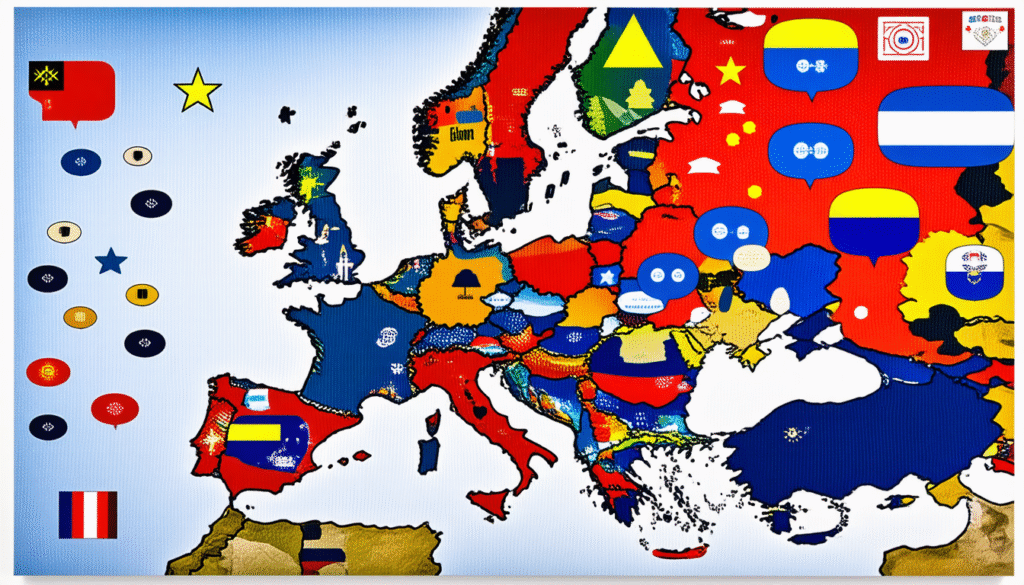
The European Union (EU) stands out among international organizations for its remarkable linguistic diversity, boasting 24 official languages. This figure might surprise many who consider that other large organizations operate effectively with just a handful of languages. While NATO, with 29 members, limits itself to English and French, and the United Nations manages with six, the EU embraces a broad multilingual policy, reflecting its commitment to unity in diversity. The languages are not merely administrative conveniences; they embody centuries of cultural heritage, national identity, and regional pride. Managing documents, legislation, and communications across these tongues presents an immense organizational challenge that underlines the EU’s dedication to inclusivity and transparency.
This multilingual ecosystem includes widely spoken languages such as English, French, and German, but also accommodates languages with smaller numbers of speakers like Maltese or Irish Gaelic. In fact, languages such as Dutch, French, German, Greek, and Swedish serve multiple member states, revealing overlapping linguistic landscapes and a degree of linguistic convergence across borders.
Behind the scenes, the scale of translation and interpretation necessary is formidable. Employing over 4,300 translators and 800 interpreters, the EU’s linguistic machinery ensures that legislative texts and communications are available in all official tongues. Surprisingly, this massive operation costs less than 1% of the EU’s annual budget, amounting to around €2 per citizen per year—a modest price to pay for linguistic equality and democratic participation across the union.
Europe’s linguistic fabric is dynamic. As the EU expands, welcoming new candidate countries, the count of official languages could rise. This trajectory prompts reflection on the feasibility of sustaining such diversity. Will working languages like English, French, and German become predominant, or does the EU envision preserving this multilingual symphony indefinitely? The balance between efficiency and cultural representation remains a vivid debate inside EU institutions such as the European Parliament, the Council of the European Union, and the European Commission.
The Unique Challenge of Managing 24 Official EU Languages
Unlike many international organizations that adopt a handful of official languages to streamline communication, the European Union upholds multilingualism as a core principle. Handling translation and interpretation for 24 recognized official languages demands an intricate logistical setup. This roster includes languages like Bulgarian, Croatian, Maltese, Irish Gaelic, and Estonian, many of which belong to different language families and present unique linguistic complexities.
First, consider the daily translation workload within EU institutions. Every major document, from legislative drafts to legal texts, must be available in all official languages. This requirement ensures that all EU citizens can access information in their mother tongue, reinforcing democratic legitimacy. For instance, a directive agreed upon in Brussels must be simultaneously available in Latvian, Slovenian, French, and every other EU language to avoid exclusion.
Such an operation is underpinned by the Directorate-General for Translation (DG Translation) and the Translation Centre for the Bodies of the EU. These bodies coordinate a highly skilled team of linguists, terminologists, and IT experts who harness advanced translation technologies alongside human expertise. Translation memory systems, glossaries, and CAT (computer-assisted translation) tools streamline the process but do not replace human nuance—crucial for legal and cultural accuracy.
Moreover, interpretation services play a pivotal role during EU meetings. Whether in the European Parliament or ministerial councils, interpreters facilitate real-time communication between delegates speaking different languages. This service empowers equal participation, providing a platform where no language dominates unduly and encouraging genuine dialogue.
Managing twenty-four languages also requires cultural sensitivity. For example, the Irish language holds symbolic significance despite a smaller number of native speakers; it became an official EU language in 2007, reflecting the EU’s respect for linguistic minorities. Similarly, regional languages like Basque or Catalan, while not official at the EU level, carry considerable weight in domestic cultural contexts. Balancing such nuances is integral to the EU’s multilingual policy.
- The EU’s 24 official languages span several language families, complicating translation workflows.
- Official translation ensures every citizen can access EU legislation and information in their native tongue.
- Real-time interpretation services guarantee effective communication in multilingual political settings.
- The DG Translation and Translation Centre coordinate this linguistic infrastructure.
- Linguistic diversity is embraced as a cultural asset, not a bureaucratic hurdle.
Origins and Evolution of the EU’s Official Languages
The journey toward recognizing 24 official languages within the European Union reflects its enlargement history and commitment to cultural respect. In its early days, the European Economic Community (EEC) was much smaller, composed mainly of six countries with just four official languages: Dutch, French, German, and Italian. This modest linguistic framework matched the union’s limited scope and membership.
Over time, as the EU expanded from six to 27 member states by 2025, the language list grew correspondingly. New members brought their national languages into the fold, enriching the EU’s linguistic tapestry. This evolution has not only posed technical challenges but also necessitated diplomatic negotiations about language status and rights.
For instance, Irish Gaelic became an official language in 2007, a decision motivated by more than mere usage statistics. It represented a political and cultural affirmation for Ireland, emphasizing equality among member states regardless of population size. Meanwhile, some languages are official in multiple countries, such as French spoken officially in Belgium, France, and Luxembourg, illustrating the complex linguistic map of Europe.
Parallel to the addition of new languages, working languages have crystallized around English, French, and German—the most frequent languages used in day-to-day EU business. Yet, this pragmatism coexists with policies guaranteeing citizens’ rights to communicate with institutions in any official language, highlighting the unmatched multilingual commitment within international governance.
- Initially, only four official languages represented the founding EU members (1958).
- Expansion to 27 member states expanded languages to 24 official EU languages.
- Irish Gaelic’s inclusion in 2007 illustrates linguistic and cultural recognition.
- English, French, and German function as primary working languages while all 24 retain official status.
- The EU’s language policy balances administrative practicality and cultural inclusivity.
How Translation and Interpretation Power the Democratic Functioning of EU Institutions
Translation and interpretation are the unsung heroes enabling the European Union’s democratic machinery to function smoothly amidst linguistic complexity. Every regulation, directive, or policy document must be accessible in all official languages, guaranteeing equality of information and participation among member states’ citizens.
The European Parliament, as the directly elected body representing EU citizens, exemplifies this multilingual ethos. Parliamentary debates involve multiple official languages, with interpreters ensuring that members understand each other without linguistic disadvantage. Similarly, Council meetings rely heavily on simultaneous interpretation, reflecting the political commitment to linguistic inclusivity.
The EU Publications Office plays a crucial role, coordinating the publication and dissemination of EU documents in all official tongues. This ensures transparency and access for individuals, businesses, and national administrations alike.
A unique aspect of the EU’s language system is its robust technological support. The use of translation memory and terminology databases maintained by the DG Translation ensures consistency and efficiency. This is essential given the precise language needed in legal and policy texts, where even small nuances can have significant implications.
Moreover, an independent body, the European Ombudsman, receives complaints from citizens regarding access to EU documents, including issues of language availability. This underscores the importance of language equity as a pillar of EU democratic legitimacy.
- Parliamentary and Council meetings employ simultaneous interpretation in all official languages.
- The EU Publications Office guarantees multilingual dissemination of official documents.
- Technological tools assist human translators in maintaining consistency and accuracy.
- The European Ombudsman safeguards citizens’ rights to accessible information in their language.
- Multilingualism strengthens the democratic legitimacy and transparency of EU governance.
Looking Ahead: The Future of EU Languages in an Enlarging Union
The European Union’s commitment to linguistic diversity faces new tests as it contemplates further enlargement. With at least five candidate countries aiming to join, the official language count is poised to increase beyond 24. This expansion will compound logistical demands on translation and interpretation services.
Critics sometimes propose streamlining the EU’s languages to the dominant working trio—English, French, and German—to prioritize efficiency and reduce costs. However, such suggestions ignore the political and social weight of language identity within member states. For smaller nations like Malta or Latvia, their languages represent more than communication tools—they are symbols of national sovereignty and cultural pride.
Furthermore, the prospect of exclusive reliance on a few languages risks alienating citizens, sowing feelings of exclusion and eroding the European ideal of unity through diversity. Instead, the EU is likely to continue investing in multilingual systems, incorporating technological advances in automated translation without sacrificing human oversight and nuance.
In addition, the unique legal status of official languages offers strong protection against reduction. As new members enter, their languages gain recognition, further intertwining language policy with enlargement dynamics. Discussions involving the Council of the European Union and the European Commission frequently address how best to manage this evolving linguistic landscape, balancing cost, efficiency, and cultural respect.
- The EU will likely add new official languages as membership expands.
- Calls to restrict official languages to few working languages face political resistance.
- Computational linguistics and AI translation tools are becoming indispensable allies.
- Language policy is deeply intertwined with notions of identity and national sovereignty.
- A strong multilingual approach will continue defining the EU’s institutional character.