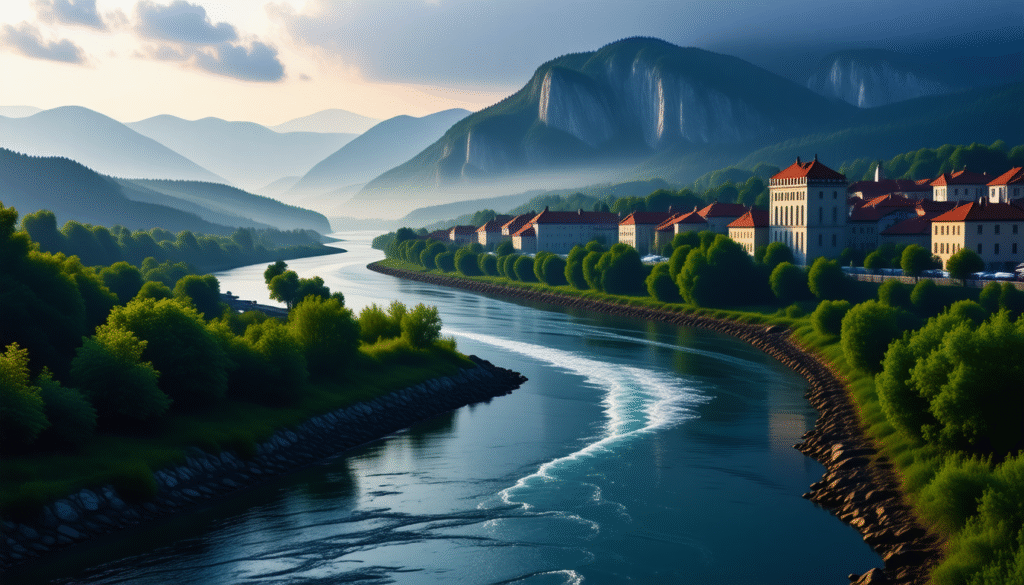
The Danube River traces an extraordinary path through Europe, intertwining geography with history, culture, and myth. Originating from the mystic Black Forest of Germany and meandering through ten countries before emptying into the Black Sea, this legendary watercourse is much more than a simple river. Its waters have been silent witnesses to epochs of empire, pulsating centers of commerce, and spectral threads binding together a rich tapestry of European civilizations. The legends and folklore entwined with its flow shimmer with tales of gods, warriors, and borderlands where worlds collide. From its storied role in shaping political boundaries to inspiring Johann Strauss’s iconic Blue Danube waltz, the river embodies an enduring symbol of connection, conflict, and cultural synthesis.
Journeying alongside the Danube reveals a fascinating interplay between natural grandeur and human endeavor. This aquatic artery has served as a frontier and conduit for trade, an engine for hydroelectric power, and a cradle for cities that boast proud histories and vibrant modern lives. Its banks are crowned by imposing fortresses, historic capitals, and fertile plains alike, each a chapter in the saga of Europe’s transformation. The Danube’s mythic waters, known to some as DanubeDreams or FlowingMyths, harbor tales that continue to captivate the imagination and underscore the river’s multifaceted identity as a fluid border and cultural force.
Geographical Majesty and Physical Characteristics of the Danube River
The Danube, Europe’s second longest river after the Volga, stretches approximately 1,770 miles (2,850 kilometers), starting from the Black Forest mountains in Germany and making its way to the Black Sea. The river courses through no fewer than ten countries: Germany, Austria, Slovakia, Hungary, Croatia, Serbia, Bulgaria, Romania, Moldova, and Ukraine, showcasing an impressive river system with a drainage basin covering an expansive 315,000 square miles (817,000 square kilometers).
This extensive basin accommodates an intricate network of around 300 tributaries, over 30 of which are navigable, effectively creating a watery web that fuels commerce and connectivity across the continent. The river is commonly divided into three main sections that reflect significant physiographical changes:
- Upper Course: Originating at the confluence of the Breg and Brigach streams in the Black Forest, it flows northeast in a rocky, narrow bed, cutting through scenic valleys and forming a landscape of rugged beauty. The upper section, about 600 miles, carries a rapid current flowing at speeds between two to five miles per hour and varies in depth from 3 to 26 feet.
- Middle Course: Marked by a broader, flat terrain with low banks, the river transitions to a lowland river with sprawling islands created by silt deposition, such as the large islands near Komárno supporting dense settlements. This portion passes through the famous Hungarian Gates and the Visegrád Gorge before sweeping past Budapest and stretching into the plains of Central and Southeastern Europe.
- Lower Course: After the dramatic Iron Gate, the river flattens out once more, with broader banks and softer currents, flowing through wetlands and marshes until it fans into the complex Danube Delta, a young landform showing nature’s artistry by extending 80 to 100 feet into the Black Sea annually.
The dynamic flow of the Danube lends itself to a range of uses: navigation channels have been enhanced with dams and dikes in Austria to improve transport, while hydroelectric power plants scattered along its length harness its energy potential. Moreover, the river’s expansive basin integrates alpine meltwaters and vast plains, influencing its hydrologic cycle and the climate of entire regions.
Such geographic grandeur highlights the Danube as an emblematic natural feature, shaping ecosystems and human habitats, embodying the BlueRiverMyth with its varied physical and ecological identities along the BordersFlow of Europe’s heartland.
The Danube as a Mythic and Cultural Crossroad
The Danube’s significance extends far beyond its physical boundaries; it courses through the collective imagination of countless European cultures, inspiring legends, music, and folklore infused with enchantment. Known as Dunav or Dunav in several languages, the river has long been a defining border in mythic narratives that blend spirituality and human history. Rooted in Celtic origins—deriving from “Danu,” a goddess symbolizing fluidity and fertility—the river’s name carries echoes of ancient deities, emphasizing its mystical aura as “MythicWaters.”
Over the centuries, the Danube served as a boundary between legendary empires and civilizations, such as the Roman Empire and later the Byzantine and Ottoman realms. This fluid border, often referenced as the DanubeFrontier, incarnated a threshold between worlds—civilized and pagan, Christian and non-Christian—where cultural exchange and conflict sparked transformative encounters. The river’s silhouette shaped narratives where warriors, saints, and spirits intertwined with the natural world, forging a cultural legacy rich in symbols and allegories.
Music and art have embraced this river’s presence fervently. Johann Strauss the Younger’s “An der schönen blauen Donau” (The Blue Danube waltz), composed in 1867, remains an emblematic anthem, celebrating the river’s romantic allure and the imperial splendor of Vienna. This melody echoes the river’s role in European identity, blending grace, history, and the vibrant life flowing along its banks.
Folklore along the Danube’s length varies widely but shares themes of water spirits, mythical creatures, and tales of transformation. For example, the Danube Legends include stories of guardian spirits protecting fishermen or ancient castles perched on gorges whispering secrets through the ripples. The river often emerges as a dynamic character—a force of nature and storytelling—embodying the very essence of the RiversEdge where reality and myth coexist.
- Folklore Themes: Spirits and water nymphs, enchanted forests, epic battles at river crossings.
- Cultural Cross-Pollination: Blending Slavic, Germanic, Roman, and Balkan mythologies along the riverbanks.
- Artistic Inspiration: Music, poetry, and visual arts that continue to celebrate the Danube’s mystique.
This symbolic tapestry underpins the ongoing appeal of the Danube as a cultural icon, transformed by time but eternally inspiring the flow of new stories, from ancient sagas to modern-day DanubeDreams that continue to enchant writers, artists, and travelers alike.
Danube as a Vital Commercial Highway and Political Boundary
Historically, the Danube’s significance as a transportation corridor cannot be overstated. For centuries, it functioned as a dense trade artery, bridging northern and southern Europe and facilitating the movement of goods, people, and ideas. This role, coupled with its strategic importance as a natural boundary, placed the river at the heart of political and economic developments in the region.
In medieval and early modern periods, the Danube delineated the edges of empires—such as the Roman Empire’s northern limit and later the frontier between the Ottoman Empire and the Habsburg Monarchy. Along these banks, fortresses and castles stood as sentinels keeping watch over the BlueBorderline, marking shifts in power across borders and times. These defensive structures were crucial for controlling access and securing trading routes.
Several major cities emerged as hubs of commerce directly thanks to their locations on the Danube’s course. Vienna (Austria), Budapest (Hungary), and Belgrade (Serbia) are prime examples where river access spurred urban development, industrial growth, and cultural vibrancy. These capitals leveraged the river’s navigability to foster cross-border trade, making the Danube an indispensable artery in Europe’s economic framework even into the 21st century.
Contemporary trade along the Danube is facilitated through an extensive network of ports and navigable routes, supported by infrastructure improvements like dams and locks that regulate water flow and ensure safe passage. The river’s waters are also harnessed for hydroelectric energy, with power plants along the upper Danube contributing significantly to regional energy needs, demonstrating how historical importance intersects with modern utility.
- Trade Commodities: Timber, grain, machinery, chemicals, and consumer goods transported via river cargo vessels.
- Strategic Fortifications: Castles and forts including the Visegrád fortresses and the Iron Gate strongholds.
- Transport Infrastructure: Dams, locks, canals, and ports enabling year-round navigation and commerce.
This dual nature—as a border and as a commercial vein—has defined the Danube’s role as a backbone of European progress, fostering interconnectedness while symbolizing division, a fascinating paradox embedded deeply in the river’s identity as the DanubeFrontier and BlueBorderline.
Ecological Challenges and Multinational Conservation Efforts Along the Danube
The vast ecosystem of the Danube River basin encompasses diverse landscapes, including alpine mountains, fertile plains, wetlands, and the immense Danube Delta. This biodiversity hotspot supports numerous species, some endangered, making the river a critical natural heritage site. However, the same factors that make the Danube instrumental in human development introduce ecological pressures that have prompted multinational conservation initiatives.
The river basin’s hydrological system, influenced by melting glaciers, tributary inflows, fluctuating water levels, and sediment transport, demands careful management. For instance, the extensive deposition of sediment has created islands and wetlands that serve as breeding grounds for wildlife but can complicate navigation. Human activities such as industrial pollution, dam construction, and agricultural runoff impose threats on water quality and aquatic habitats.
Recognizing the Danube’s fragility and importance, riparian countries have come together through frameworks like the International Commission for the Protection of the Danube River (ICPDR), which coordinates efforts to improve water quality, enhance biodiversity, and promote sustainable river management. These collaborative strategies ensure that the river remains a productive and healthy watercourse benefitting millions in the region.
- Key Ecological Concerns: Pollution, habitat fragmentation, invasive species, and water regulation.
- Conservation Actions: Pollution monitoring, habitat restoration projects, and cross-border environmental treaties.
- Important Natural Areas: The Danube Delta, floodplains, and protected wetlands.
In 2025, contemporary policies emphasize balancing human use and ecological integrity, embodying the spirit of DanubeDreams as communities strive to preserve the river’s vitality for future generations. This ongoing stewardship reflects both a respect for nature and a recognition of the shared responsibility among nations flowing along this extraordinary RiverRealm.
The Danube’s Enduring Influence on European Identity and Future Prospects
The Danube River remains a powerful symbol and practical asset to Europe’s past and future. Its imprint on the continent’s cultural, political, and economic dimensions showcases a dynamic river that shapes more than geography—it molds identities. The river weaves a narrative line connecting medieval fortresses, imperial courts, bustling modern capitals, and rural communities dependent on its resources.
As the 21st century advances, the Danube continues to inspire innovation and cooperation. Transnational projects for navigation, energy, and tourism capitalize on its position as an integrative force within Europe. Cultural festivals celebrating DanubeLegends attract visitors and foster cross-border friendships, while initiatives to promote sustainable tourism highlight the river’s natural and historical wealth.
Furthermore, ongoing scientific research aims to understand and mitigate climate change’s impacts on the river’s regime, ensuring its resource viability. The DanubeFrontier, once a line of division, increasingly symbolizes unity—countries collaborate on issues from clean energy to biodiversity, navigating a mutual journey along this BlueRiverMyth that holds promise and challenge alike.
- Modern Collaborative Projects: Danube navigation networks, cross-border conservation zones, and cultural exchange programs.
- Tourism and Heritage: River cruises, heritage trails, and festivals themed around the river’s mythic past.
- Climate Adaptation Efforts: Flood management systems, habitat protection, and carbon emission reduction initiatives.
The Danube’s continuing saga is a flow of ancient lore and contemporary vigor, living proof that rivers are not mere boundaries but life-giving veins connecting the heart of a continent, an eternal source of fascination and shared destiny within the ever-evolving RiverRealm.