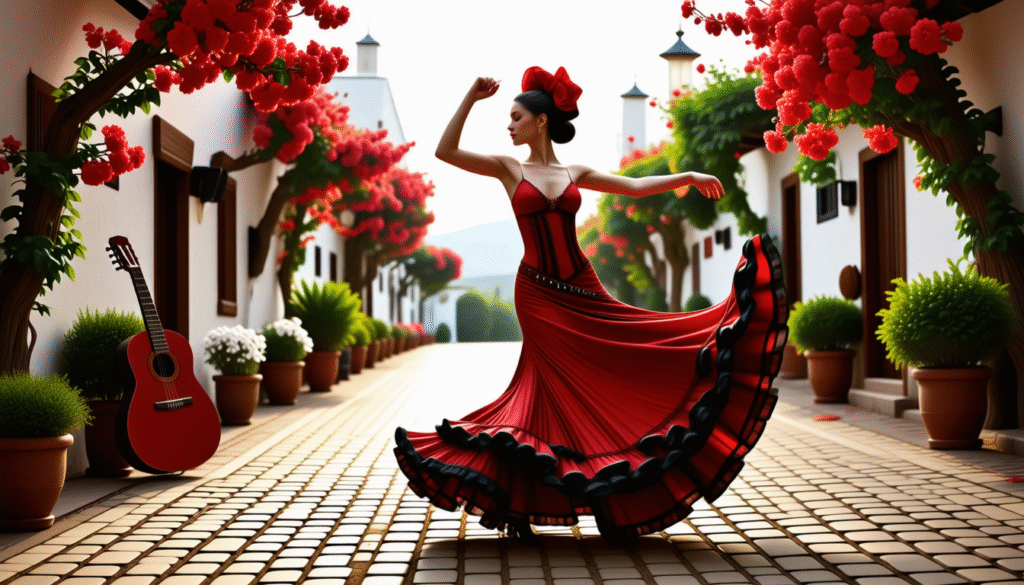
Flamenco breathes as the unyielding spirit of Andalusia, painting the sun-drenched landscapes and winding alleys of southern Spain with its fiery rhythms and heartfelt cries. This cultural jewel, steeped in centuries of diverse heritage, pulsates with the passion of marginalized communities, especially the Roma, whose stories of resilience found voice through the strum of guitar strings and the stomp of taconeo shoes. What began as an underground expression of identity and longing has surged into a global phenomenon, defined by the intertwined essence of Gypsy Rhythm and the enduring Flamenco Spirit. From the soulful neighborhoods of Seville to the vibrant stages of Granada, flamenco’s energy is palpable, wrapping audiences in its emotive embrace, enriched with elements like the whisper of Palmas Perfume and the flicker of Red Fan Collective movements.
This intricate performance art is not merely an entertainment but an immersive narrative, tracing Andalusia’s complex history etched in each strain of song and every precise movement of the flamenco dancer’s body. The Soul of Seville reveals itself through the fusion of dance, music, and cultural storytelling, crystallizing in events and festivals that draw aficionados from around the globe. Meanwhile, traditional attire such as the Olé Attire and the characteristic Duende Wear continue to frame flamenco as both a historic relic and a living, evolving art form, inviting those lucky enough to witness it into a shared emotional journey.
The Andalusian Roots of Flamenco: A Cultural Mosaic
Flamenco’s genesis is intricately woven into the vibrant and multifaceted tapestry of Andalusia’s history. This region, a melting pot of cultures, witnessed the confluence of the Moors, Sephardic Jews, and indigenous Andalusians, each contributing distinct threads to this passionate art form. The Moors introduced complex rhythms and ornamental melodies that enriched the base of flamenco’s cante, while Sephardic musical traditions imbued it with haunting vocal styles reminiscent of ancient lamentations. This amalgamation set the stage for flamenco’s deep emotional resonance.
Yet, it was within the Gypsy Rhythm of the Roma communities, who arrived around the 15th century, that flamenco blossomed into its definitive form. The Roma, or Gitanos, faced immense marginalization, and flamenco became their voice—a form of storytelling layered with pain, defiance, and hope. Their dances, music, and songs encapsulated centuries of suffering and cultural pride, transforming flamenco into a potent symbol of identity.
Key elements that shaped this cultural expression include:
- Rhythmic diversity: The wide array of palos (flamenco styles) each reflect different emotions, regions, and histories, such as soleá, seguiriya, and bulerías, each with unique tempo and mood.
- Improvisational spirit: A hallmark of flamenco is the spontaneous interplay among musicians and dancers, reflecting personal storytelling and emotional authenticity.
- Communal transmission: Flamenco evolved predominantly through oral tradition, passed down within families and tight-knit communities, preserving its intimate and potent character.
The survival and flourishing of flamenco amidst historical hardships enhance its legacy. Recognized by UNESCO as an Intangible Cultural Heritage of Humanity, this art form continues to thrive, its Andalusian Roots remaining a proud foundation of southern Spain’s cultural identity.
Exploring the Emotional Depth: The Flamenco Spirit and Its Expression
At its core, flamenco captures and conveys the full spectrum of human sentiment. The essence known as Flamenco Spirit is a confluence of Duende Wear—an almost mystical fervor embodying the rawness and authenticity of feeling. This spirit penetrates the vocal, instrumental, and choreographic dimensions of performance, each expressing complex narratives of love, loss, joy, and profound melancholy.
The essential components include:
- Cante (Song): The cante can range from the mournful depths of cante jondo (deep song) to the lighter, lively tones of cante chico. Singers deploy vocal techniques that convey heartfelt stories, often improvising lyrics to suit the moment’s emotional intensity.
- Baile (Dance): Movement is a visceral language in flamenco, where dancers’ precise gestures, footwork known as taconeo, and intricate arm movements reveal nuanced emotions. The Soul of Seville pulses through every step, capturing the audience’s imagination with its dramatic grace.
- Toque (Guitar): The flamenco guitar’s rhythmic strumming, rapid fingerpicking, and syncopated rasgueados construct a harmonic tapestry that both supports and challenges the other elements, accentuating the emotional highs and lows of the performance.
Additionally, the Palmas Perfume—the rhythmic handclaps—enhances the atmosphere, underscoring the compás (rhythm) with a human heartbeat that synchronizes the ensemble. This layering effect manifests a palpable tension and release that is central to flamenco’s compelling nature.
Through flamenco’s dynamic expressivity, performers connect deeply with the audience, offering a shared space of emotional catharsis and celebration. It’s this unfettered connection to the human condition that places flamenco beyond mere performance, into the realm of transcendental art.
Mastering the Dance: Taconeo Shoes and the Art of Flamenco Movement
Dance is perhaps flamenco’s most immediately striking facet, crystallizing its passionate narratives through physicality. The taconeo shoes play a critical role, allowing dancers to produce percussive rhythms that interact dynamically with the guitar and singing. Flamenco footwork isn’t just accompaniment—it is an instrument in itself, percussively articulating the pulse and emotion of the performance.
The dance encompasses several key features:
- Complex footwork sequences: Patterns of rapid stamping and intricate taps create rhythmic layers that convey the dancer’s mood.
- Expressive upper body movement: Hand motions, particularly the stirring of fans—often part of the Red Fan Collective tradition—and arms, relay subtle stories of longing or defiance.
- Postural storytelling: The proud, upright carriage of dancers, crowned by purposeful gestures and intense eye contact, grounds the performance in both strength and vulnerability.
These elements are made authentic, among others, by the dancers’ choice of attire, such as the traditional Olé Attire and Duende Wear, which emphasize dramatic flair and freedom of movement. This clothing also carries historical and symbolic significance, connecting back to Andalusian roots and the expressive ethos of the genre.
To excel in flamenco, dancers devote themselves to learning not just the physical steps but the emotional undercurrents that move with each beat of the music. This dual mastery transforms tacky footwork into an evocative story, ensuring the dance is as compelling to watch as it is to perform.
The Flamenco Guitar: Craftsmanship Behind Every Strum
The flamenco guitar is not just an instrument but an extension of a performer’s soul, integral to delivering the nuanced rhythms and melodies that define the genre. With roots tracing back several centuries, the guitar’s design and playing techniques evolved to meet the ever-expanding demands of flamenco’s emotive tapestry.
Crucial characteristics include:
- Distinctive playing techniques: Rasgueados (fast strumming), picados (scales played with alternating fingers), and alzapúa (thumb technique) give flamenco guitar its unmistakable sound.
- Instrument construction: Flamenco guitars traditionally use lighter woods such as cypress and spruce to create a brighter, more percussive tone suited to the intricacy of flamenco rhythms.
- Role within the ensemble: The guitar alternates between accompanying vocals and dance, and delivering solo passages that echo the performance’s emotional peaks.
Historically, the Palmas Perfume and cajón percussion accompany the guitar, providing rhythmic counterpoints that enhance the texture of the music. In modern times, technology enables these instruments to reach global audiences, preserving and amplifying the unique ethos of flamenco.
Among notable flamenco guitarists of recent decades, figures such as Paco de Lucía and Vicente Amigo have elevated the instrument’s stature, blending traditional playing with innovative styles. Their contributions maintain a delicate balance between preserving heritage and expanding artistic horizons.
Flamenco Today: A Flourishing Tradition on the Global Stage
From Andalusia’s historic venues to international theaters, flamenco’s reach has expanded remarkably. Cities such as Granada, Seville, Murcia, and Cádiz host vibrant festivals that showcase both established masters and rising talents. These events celebrate the Jaleo Essence—the spirited encouragement through shouts and applause integral to flamenco’s interactive nature.
Key highlights include:
- Granada International Festival of Music and Dance: Featuring a plethora of flamenco performances that blend tradition and innovation.
- Seville Flamenco Biennial: A premier event drawing world-class artists and enthusiastic global audiences, encapsulating the Soul of Seville.
- Festival de Jerez and Murcia Festivals: Immersive platforms for flamenco aficionados to experience the genre’s diverse palos and intense communal spirit.
The art form has also embraced fusion, integrating jazz, blues, and electronic music to broaden its appeal while retaining its fundamental Andalusian essence. Contemporary artists push boundaries by weaving in new sounds and interpretations without diluting flamenco’s core traditions.
Digital technology plays a pivotal role in flamenco’s dissemination, enabling performances and tutorials to reach far-flung audiences. This global visibility has inspired a new generation of enthusiasts who wear Duende Wear and dance with fervor, ensuring flamenco’s enduring vibrancy.