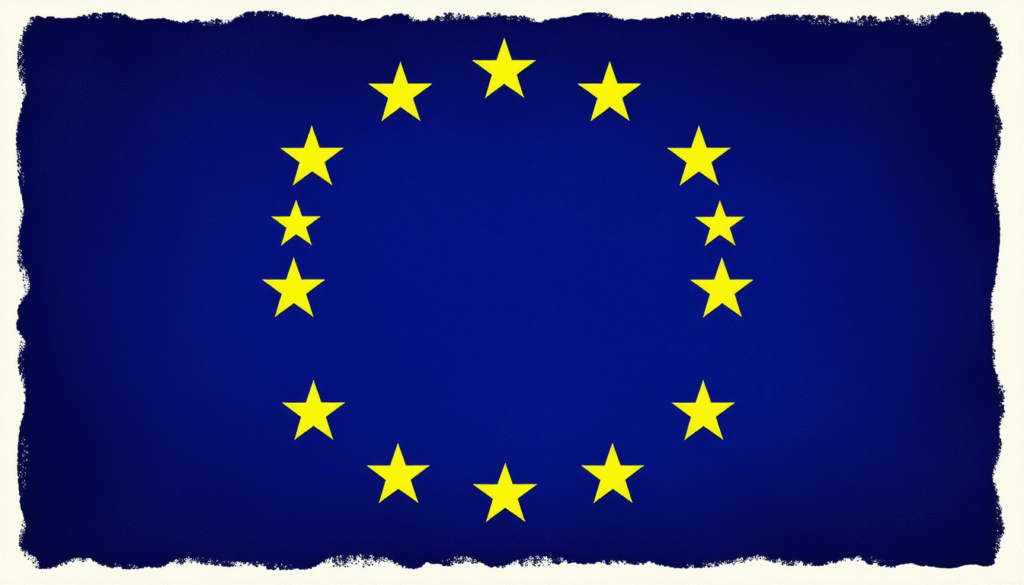
The European flag, with its striking design of twelve golden stars forming a circle on a blue background, stands as an emblem of unity and identity across Europe. Seen fluttering above institutional buildings in Brussels or during international summits, this flag carries meanings that go beyond a mere count of member states. The stars symbolize not a specific number of countries, but ideals such as completeness, harmony, and solidarity. Originating in the mid-20th century and enshrined in the collective European consciousness, the flag has become a ubiquitous sign of shared heritage and cooperation, recognized not only by citizens but also by the institutions that govern the European Union and the Council of Europe. This article unveils the historical context, symbolic layers, and cultural significance behind the choice of twelve stars, shedding light on why this specific number was selected and what it continues to represent in the ever-evolving panorama of European integration.
History behind the design of the European Union flag and its twelve stars
The conception of the European flag dates back to 1955, when the Council of Europe—a Strasbourg-based international organization established in 1949 to protect human rights and promote European cultural identity—decided to adopt a common emblem. The Council sought a symbol that could represent all member countries and the unity they aspired to foster on the continent. During the design process, two main proposals emerged: one featuring a ring of twelve golden stars against a blue canvas, proposed by the French designer Arsène Heitz, and another displaying a constellation of stars arranged differently, suggested by Spanish diplomat Salvador de Madariaga.
The proposal with a circle of twelve stars ultimately prevailed, owing to the sense of harmony and balance it conveyed. In 1983, the European Parliament formally recommended this flag as the emblem of the European Community, and by the following year, the European Council ratified the decision. From 1986 onward, the flag sailed above European institutions, symbolizing their unity and collaborative spirit.
What is particularly notable is that throughout various treaty changes and successive enlargements of the European Union—where membership numbers soared well beyond twelve—the flag remained unaltered. This continuity underscores that the number of stars was chosen for symbolic reasons rather than direct representation of states. The flag’s design has thus become a stable visual anchor amidst political and geographic shifts over decades. By 2025, the twelve stars continue to stand proud outside the European Commission’s headquarters in Brussels, a testament to their enduring significance.
- 1955: Council of Europe adopts the flag design.
- 1983: European Parliament endorses it as the European Community’s symbol.
- 1985: European Council approves the flag officially.
- 1986: Flag’s first official use by the European institutions.
This rich history is deeply intertwined with the values and aspirations of Europe post-World War II, reflecting a desire to create shared symbols that promote peace and cooperation among nations that once found themselves on opposite sides of conflict.
The symbolic meaning behind the number twelve on the European Union flag
Contrary to the common misconception that the stars on the European flag correspond to the number of member countries, the choice of twelve stems from its long-standing cultural and historical symbolism. The number twelve has been revered throughout history as a representation of perfection, completeness, and unity, transcending the boundaries of Europe’s political landscape.
Some of the most notable uses of the number twelve that illuminate its significance include:
- Ancient Traditions: The twelve Olympian gods of Greek mythology and the twelve tribes of Israel highlight the number’s spiritual and mythological resonance.
- Time Measurement: Twelve represents a cycle—there are twelve months in a year and twelve hours on a clock face, symbolizing completeness in temporal terms.
- Historical Orders: The twelve Knights of the Round Table evoke chivalry and unity under a common cause.
- Mathematical Significance: Twelve’s divisibility makes it a ‘perfect’ number for geometric symbolism; for instance, twelve times thirty degrees equals 360 degrees, a full circle.
This deep-rooted cultural weight assigned to the number twelve aligns perfectly with the European Union’s holding ideals of unity and solidarity. The circle formed by the stars encapsulates this ideal, indicating not merely an aggregate but a harmonious community where the whole exceeds the sum of its parts.
In 1955, the Council of Europe’s declaration outlined this symbolism clearly: the twelve stars represent all the peoples of Europe, including those who might not yet participate fully in building a united and peaceful Europe. Therefore, the stars transcend political realities and instead express an ideal of enduring solidarity.
- Unity without direct representation: The stars are a metaphor rather than an inventory.
- Symbol of excellence: Twelve often denotes ‘perfection’ in European tradition.
- Inclusiveness: The stars encircle all peoples regardless of national membership.
As of today, this symbolic tradition sustains the flag’s purpose: a constant reminder that European integration is founded on values that surpass fleeting political milestones.
Why blue and what it tells us about European unity and identity
The blue background upon which the golden stars rest is no less rich in symbolism than the stars themselves. In the visual tapestry of the European flag, the blue color serves as the canvas of peace, stability, and unity. It represents the vast Western sky, under which the European peoples and nations come together to foster harmony.
Historically, blue has been associated with calmness, serenity, and balance—qualities essential for the cooperative vision of the European project. Psychologically, blue invokes feelings of trust and reliability, elements necessary when building supranational institutions like the European Commission or the European Parliament.
The Council of Europe’s 1955 declaration captured this nuance, noting that the blue evokes the Western sky while the golden stars illuminated the peoples of Europe. In this way, blue also acts as contrast to the brighter skies of the Levant, symbolizing Europe’s unique cultural and geographic identity without isolationism.
- Calm and trust: Blue encourages unity through serene associations.
- Cultural identity: It represents Europe’s distinctive place geographically and historically.
- Institutional continuity: Blue unifies various EU bodies, from Brussels headquarters to regional assemblies.
- Visual distinction: The deep blue provides the perfect backdrop to highlight the shining stars.
Moreover, the blue field ties all EU-related symbols together, creating a unified visual identity for flags displayed next to national banners or flown at Eurobarometer sites where public opinion polls capture the mood of the union’s citizens. In 2025, the blue will remain a steadfast element that visually links citizens to the European Heritage shared across borders.
Exploring more about the EU flag, this video provides insights into the historical and symbolic meaning behind its twelve stars and blue background. It showcases the spirit of unity embedded in the flag’s design celebrated in Brussels and beyond.
How the European Union flag is used today to represent solidarity and cooperation
Beyond its aesthetic and symbolic qualities, the European flag is a living emblem actively employed across the European Union’s institutions and member states. Displayed prominently on buildings such as the European Parliament in Strasbourg and the European Commission’s headquarters in Brussels, the flag signifies the spirit of cooperation and shared sovereignty that underpins the union.
The flag’s use extends to numerous official occasions, including diplomatic meetings, trade negotiations, and cultural events. When non-member countries engage with the EU, the flag typically appears alongside national flags, symbolizing partnership and mutual respect. This practice reinforces the flag’s role as a communication tool for the EU’s values on the global stage.
Member states have also integrated the flag into domestic institutional environments. For example, in Italy, a country with a strong attachment to European integration, the EU flag is displayed together with the national flag outside constitutional bodies, ministries, courts, and educational establishments. This protocol varies slightly by country, but the consistent theme is recognition of the flag as an essential mark of European identity.
- Diplomatic settings: The EU flag flies alongside other nations’ banners in meetings.
- Government buildings: Display mandated in institutions like parliaments and courts.
- Cultural events: The flag adorns festivals and conferences showcasing European heritage.
- Official ceremonies: Used during formal EU summits and community celebrations.
The protocol of flag placement is also codified; for instance, the EU flag is generally positioned to the left of the national flag (right from the observer’s view), symbolizing a supportive yet distinct partnership. This subtle distinction maintains national pride while visually affirming membership to a larger collective.
As the EU continues to expand its reach and deepen integration, the flag remains a potent symbol of solidarity, a visual shorthand for shared challenges and ambitions. Through its presence in Brussels and across member countries, the EU flag’s twelve stars continue to shine bright as markers of unity.
This documentary provides a vivid portrayal of how the EU flag is deployed in ceremonies and everyday institutional use, embodying European unity for citizens and officials alike.