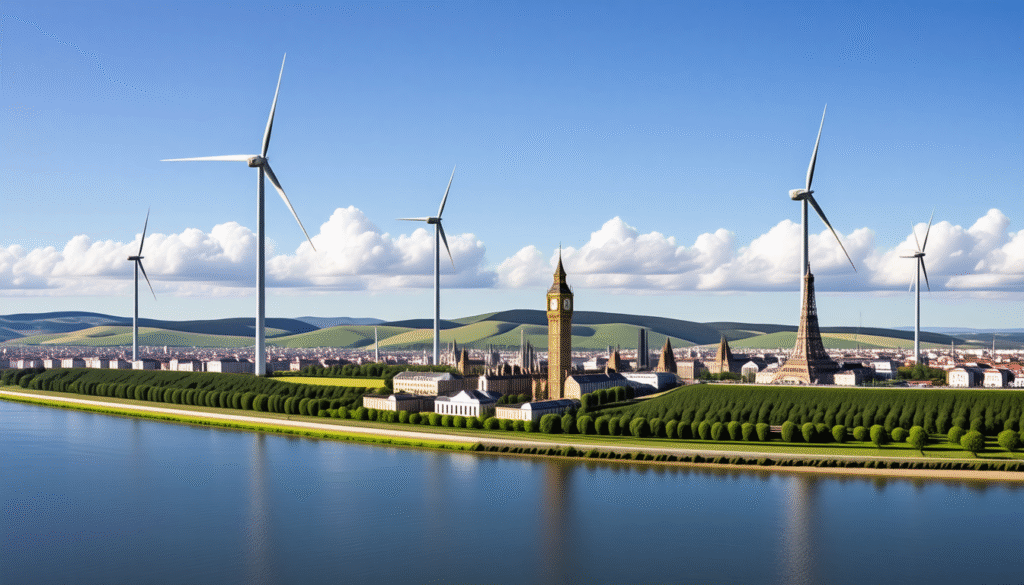
Europe’s ambitious drive towards carbon neutrality finds a potent ally in wind energy, a sector that continues to shape the continent’s energy future with its rapid growth and innovation. Amid shifting global energy dynamics and mounting climate targets, wind power emerges not only as a renewable vigor but also as a strategic cornerstone in European policy and industry. This green force is intricately woven into the European Green Deal, influencing everything from energy security to economic competitiveness. The remarkable expansion of installations, dominated by a synergy of onshore and offshore projects, is testimony to Europe’s commitment. Still, the journey faces hurdles ranging from supply chain challenges to regulatory bottlenecks, all against the backdrop of an urgent need to accelerate the energy transition.
The involvement of major players like Siemens Gamesa, Vestas, and Ørsted highlights a robust industry ecosystem combining technology, investment, and environmental stewardship. However, despite record-breaking capacity additions, experts warn that Europe’s infrastructure growth is trailing behind the 2030 targets essential for meeting renewable energy benchmarks. In parallel, newer policies designed to expedite permitting and bolster offshore development reflect an evolving regulatory landscape, keen on harnessing wind’s full potential. This lively, competitive sector thus paints a complex yet invigorating picture of energy transformation, embodying Europe’s endeavor to “make energy choices in Europe.”
Trends Driving the Expansion of Wind Energy Capacity in Europe
Europe’s wind energy sector has witnessed a surge in installed capacity, bolstered by both mature onshore operations and the burgeoning offshore market. From the Netherlands to Spain, wind projects are proliferating, catalyzing significant contributions to the continent’s electricity matrix. The year 2024 saw a substantial increase, with about 15 GW of new wind power added, split between 13 GW onshore and 2.3 GW offshore. This achievement, while impressive, still falls short of the level required to fully satisfy the European Union’s climate strategies for 2030.
Several factors underpin this growth. First, technological advancements in turbine efficiency, largely attributed to leaders such as GE Renewable Energy and Nordex, have enabled larger turbines with greater energy output per unit. These enhancements translate into optimized land use and higher yield farms, particularly in dense wind corridors. Offshore wind, with companies like Ørsted and Enel Green Power spearheading developments, benefits from deeper waters made accessible by floating turbine technologies, unlocking previously untapped offshore regions.
Furthermore, policy frameworks have been instrumental in incentivizing investments. The introduction of the European Wind Power Package and related action plans streamlines permitting processes, a historically thorny issue slowing deployment. In addition, auction designs promoting competitive pricing have boosted investor confidence, attracting capital to this capital-intensive sector.
- Technological breakthroughs in blade design and turbine durability
- Expansion of offshore wind farms with floating turbine technology
- Regulatory reforms facilitating faster project approvals
- Enhanced auction mechanisms driving investment and pricing competitiveness
- Strategic collaborations between industry leaders like Siemens Gamesa, Vestas, and ABB
However, the sector is not without its constraints. Supply chain disruptions, especially in rare earth components and manufacturing capacities concentrated in non-European countries, occasionally stall progress. Initiatives aimed at reducing dependencies by strengthening local supply networks and encouraging innovation seek to remedy these vulnerabilities, ensuring Europe’s strategic autonomy in wind technology.
Impact of Wind Energy on Europe’s Climate and Energy Targets
Wind power occupies a central role in Europe’s quest to curb greenhouse gas emissions and enhance energy independence. The European Green Deal prioritizes a renewable energy share substantial enough to replace fossil fuels while boosting economic resilience. In this context, wind capacity contributes roughly 20% of the continent’s electricity—as of 2024—making it a critical pillar for cleaner power generation in grids spanning from Scandinavia to the Mediterranean.
The carbon footprint reduction tied to wind energy is impressive. Unlike fossil fuels, wind turbines generate electricity without direct emissions, reducing air pollution and helping nations comply with commitments under the Paris Agreement. Moreover, wind’s integration into the energy mix minimizes reliance on imported energy sources, which are subject to geopolitical fluctuations and price volatility—issues acutely felt during recent global crises.
Countries have strategically tailored their wind energy policies to leverage this advantage. For instance, Germany’s Energiewende program sets ambitious capacity expansion goals paired with community ownership models, fostering public acceptance and local benefits. Spain harnesses abundant coastal wind potential, with Iberdrola playing a pivotal role in scaling offshore developments. Together, these efforts underscore wind’s multifaceted benefits.
- Substantial reduction in greenhouse gas emissions
- Diversification of energy supply sources
- Contributions to EU’s 42.5% renewable energy target by 2030
- Strengthening energy security amid global supply uncertainties
- Promoting local economies through renewable job creation
The challenge remains to accelerate capacity installation to meet strict timelines. This requires balancing grid stability concerns—since wind is intermittent—with advancing storage solutions and grid interconnectivity. Operators like Enercon and Senvion are investing in smart grid technologies and hybrid renewable systems combining wind with solar and storage. The evolving infrastructure will require ongoing innovation to hold the key to Europe’s clean energy ambitions.
Technological Innovations Steering the Wind Industry in Europe
In the quest for cleaner and more efficient energy production, European wind technology has surged ahead with remarkable innovation. From cutting-edge turbine designs to AI-powered maintenance systems, the industry harnesses a blend of engineering prowess and digital transformation that reshapes the traditional energy landscape.
Leading manufacturers such as Siemens Gamesa and Vestas continuously push boundaries by introducing larger rotors, taller towers, and more reliable components. These improvements boost energy yields and reduce the cost per megawatt-hour, making wind an increasingly competitive choice compared to fossil fuel options. Floating offshore turbines expand deployment possibilities in regions previously inaccessible due to sea depth constraints, dramatically enlarging the potential wind resource base.
Another exciting frontier is digitalization. Companies like ABB optimize operational efficiency through predictive analytics and condition monitoring. These technologies minimize downtime and extend turbine lifespans by preemptively addressing mechanical wear and faults. Similarly, integrating wind farms with smart grids enables real-time adjustments to fluctuating generation, securing supply reliability.
- Next-generation turbine architectures featuring increased rotor diameters
- Floating wind turbines opening deep-water installation sites
- Predictive maintenance powered by AI and machine learning
- Smart grid integration facilitating dynamic energy management
- Collaborative innovation among industry giants including GE Renewable Energy and Enel Green Power
This wave of technological progress also coincides with a focus on sustainability in production and recycling. Efforts to utilize recyclable materials and reduce environmental footprints during manufacturing reflect a holistic approach. As Europe aims to triple its wind output by 2040, these advancements will be vital in delivering sustainable, cost-effective growth that aligns with ecological commitments.
Key Industry Players and Their Role in Europe’s Wind Market Growth
The European wind energy arena brings together a constellation of influential companies whose expertise and investments steer the sector forward. Giants such as Siemens Gamesa, Vestas, and Nordex dominate turbine manufacturing, consistently unveiling innovations that shape market dynamics. Their competitive edge derives from decades of experience, extensive R&D, and strategic alliances, underscored by strong European roots paired with global outreach.
Energy producers including Iberdrola, Ørsted, and Enel Green Power lead in project development and operational management. These firms innovate with large-scale offshore wind farms and community-based projects, delivering clean power to millions of households. ABB’s contributions in electrical systems and grid integration complement these efforts by optimizing transmission and distribution efficiency.
Smaller yet influential market participants like Senvion play niche roles, often pioneering modular or regionalized turbine solutions tailored for onshore applications. The combined ecosystem fosters diversity and resilience, ensuring Europe remains competitive on the world stage despite global challenges.
- Siemens Gamesa & Vestas: Leaders in advanced turbine engineering
- Ørsted & Iberdrola: Pioneers in offshore wind farm development
- Nordex & Enercon: Specialists in onshore wind power solutions
- ABB: Providers of electrical infrastructure and grid optimization
- Senvion & Enel Green Power: Innovators in modular and hybrid renewable projects
This intricate network of collaborators and competitors drives innovation, deployment speed, and market expansion. Their strong commitment to European wind power remains a crucial factor in overcoming installation bottlenecks, supply chain dependencies, and regulatory challenges.
Challenges and Future Outlook for Wind Energy in Europe
While wind energy enjoys robust growth across Europe, the path to a fully green continent remains strewn with obstacles. Achieving the EU’s climate targets demands a steep acceleration in installations, yet systemic challenges persist.
Among the foremost hurdles are regulatory delays. Complex permitting requirements sometimes extend project timelines, affecting offshore and onshore developments alike. Although recent European Commission reforms aim to counter these bottlenecks, harmonizing multi-level governance remains a work in progress. The sector also grapples with supply chain fragility, notably the reliance on imported components like rare earth magnets essential for turbine generators. This dependence exposes projects to geopolitical risks and logistic delays.
Furthermore, integrating enormous new wind capacities into existing grids necessitates substantial modernization efforts. Addressing intermittency through storage and interconnectivity demands sophisticated infrastructure investments, often hindered by budgetary and coordination challenges. Additionally, public acceptance issues linked to landscape impacts or wildlife concerns occasionally hamper site selections.
- Lengthy and complex permitting processes remain an installation bottleneck
- Supply chain vulnerabilities in critical components pose risks
- Grid integration and intermittency management require upgraded infrastructure
- Local opposition based on environmental or aesthetic concerns
- Need for enhanced collaboration between EU bodies and member states
Looking ahead, momentum builds around ambitious initiatives such as the REPowerEU plan, which emphasizes renewable expansion to reduce fossil fuel dependency post-pandemic and amid geopolitical uncertainty. Embracing digital tools, fostering local manufacturing, and streamlining regulations represent the promising pathways to overcome obstacles. The expansion targets for the decade anticipate nearly quadrupling wind energy output by 2040, a task calling for relentless innovation and cooperation across sectors. Europe’s wind saga stands as both a technological triumph and a testament to resilient policy-making.