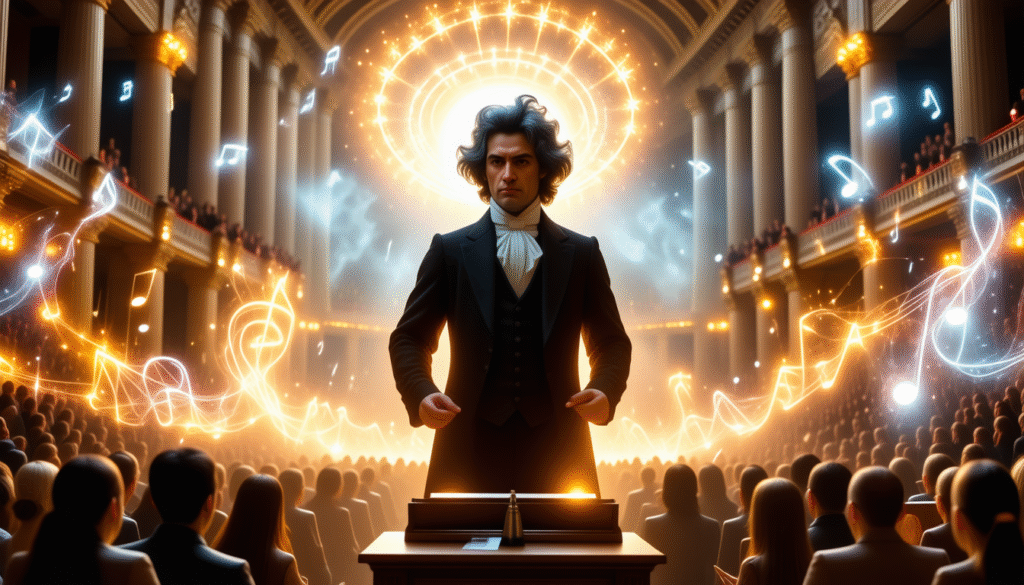
Europe has long sought a unifying melody that transcends borders and languages, a sonic emblem of shared ideals and collective identity. The choice fell on an extraordinary symphonic moment: the “Ode to Joy,” the final movement of Ludwig van Beethoven’s Ninth Symphony. This instrumental piece, rooted in a poetic vision by Friedrich Schiller, evolved into the official anthem symbolizing not just the European Union but the broader vision of Europe’s unity, peace, and freedom. In a continent often characterized by a patchwork of cultures and histories, the “Ode to Joy” functions as a joyful declaration of harmony and solidarity, embodying the aspiration for a united Europe that celebrates its diversity without succumbing to division. From Council of Europe decisions in the early 1970s to its adoption by the EU in the mid-80s, the anthem’s journey reflects decades of political and cultural efforts to craft a European experience commonsensical yet symbolic.
Behind the soaring chords lies a tapestry of historical context and symbolic significance. Beethoven’s composition, dating back to the 1820s, was infused with Schiller’s 18th-century idealism about the brotherhood of mankind. The evolution from poetry to symphony to anthem encapsulates a fascinating cultural transformation: from the aspirations of Enlightenment thinkers to the modern hopes of continental cooperation. By 2025, the anthem continues to resonate during official ceremonies, sporting events, and political milestones, permeating European consciousness like no other melody. Its instrumental nature allows it to transcend linguistic barriers, promoting unity through purely emotive, musical expression. With strong liaisons to values like freedom, peace, and solidarity, this iconic piece serves as a sonic reminder of shared heritage and ongoing commitments, echoing through both grand halls and grassroots movements.
How Beethoven’s “Ode to Joy” Became the Official Anthem of Europe
The transformation of Beethoven’s 1823 Ninth Symphony into Europe’s anthem was far from accidental. The process began in earnest during the early 1970s when the Council of Europe was on a quest for a symbol that could musically embody the idea of European cohesion. This move followed a suggestion by Richard von Coudenhove-Kalergi in the 1950s, who proposed an emblem reflecting pan-European unity. The choice of Beethoven resonated deeply because he was widely revered not only as a German musical genius but as a figure whose works captured universal values transcending national boundaries.
The Council of Europe’s Parliamentary Assembly took an instrumental decision in 1971 to adopt the prelude of the “Ode to Joy” as the anthem. The official announcement came in early 1972 at Strasbourg, crystallizing Beethoven’s work as the symbolic accompaniment for European ideals. Conductor Herbert von Karajan’s expertly crafted instrumental arrangements played a vital role, creating versions for piano, wind instruments, and symphony orchestra. His much-commented choice of tempo marked a deliberate artistic nuance, with a slower mimicking the anthem’s solemnity and grandeur.
Several factors contributed to the anthem’s widespread appeal:
- Universality: The melody’s uplifting theme reflects human joy and unity without linguistic constraints.
- Historical significance: Beethoven’s legacy is deeply intertwined with notions of freedom and resistance, mirroring European democratic aspirations.
- Cultural recognition: The familiarity of the “Ode to Joy” across Europe made it an accessible and evocative choice.
- Instrumental flexibility: Adaptable to various orchestral configurations, enhancing its usability in diverse settings.
By the mid-1980s, the anthem was embraced by the European Community, later evolving into its role within the European Union’s identity. Its purpose, importantly, has never been to supplant individual national anthems but to celebrate a collective sense of belonging and shared values, which remain the bedrock of the European project.
Key Contributions of Herbert von Karajan in Shaping the Anthem
While Beethoven’s composition provided the musical foundation, Herbert von Karajan’s interpretations elevated it into a formal anthem suited for political and civic occasions. His decisions around tempo, instrumentation, and tone lent the melody the gravitas and emotional precision required for official use. This attention to nuance reflects the connection between artistic interpretation and political symbolism, underlining how music can act as a powerful emblem beyond mere notes.
The Symbolic Power of the European Anthem in Promoting Unity, Peace, and Freedom
Music possesses unique abilities to unify individuals, and the European anthem exemplifies this power by representing ideals deeply rooted in the continent’s collective experience. The “Ode to Joy,” inspired by Schiller’s vision of “brotherhood of man,” captures the aspiration for harmony amid diversity. It articulates freedom from oppression, peace after centuries of conflict, and a commitment to solidarity across countries historically fraught with division.
The anthem’s role is reinforced during official events such as treaty signings, political inaugurations, and Europe Day celebrations. It functions not only as celebratory music but also as a reminder of shared responsibilities and mutual respect. Its instrumental character removes the barrier of language, inviting all Europeans to participate emotionally and symbolically in the continent’s ongoing journey.
Examples of the anthem’s resonance include:
- Multilingual inclusivity: Without words, the anthem avoids privileging any language, aligning with the EU’s motto “United in Diversity.”
- Occasional prominence: From the signing of the Treaty of Lisbon to high-profile visits by dignitaries such as President Volodymyr Zelenskyy, the anthem dignifies ceremonial moments.
- Public broadcasting traditions: Stations like Deutschlandfunk routinely air the anthem, reinforcing public familiarity and respect.
- Cultural diplomacy: The anthem often accompanies diplomatic events, such as partnership agreements between the EU and external nations like Japan.
Moreover, the anthem has been used in poignant demonstrations of European ideals, such as members of the UK’s Parliament singing during Brexit debates, highlighting the song’s role as a tool for advocacy and identity expression.
How the Anthem Reflects the EU’s Ideals Today
Nearly six decades after its adoption, the anthem remains a beacon of the EU’s core principles:
- Freedom: The music echoes liberty’s triumph over tyranny, a vital message amidst geopolitical challenges.
- Peace: Symbolizing the continent’s long journey away from conflict toward cooperation.
- Solidarity: Reinforcing the importance of mutual aid, especially in contemporary crises.
The continued relevance of the anthem in 2025 underscores its integral role in European identity and serves as a rallying call to uphold shared values in an ever-changing global landscape.
Beethoven’s Legacy as a Pan-European Icon through the “Ode to Joy”
Ludwig van Beethoven’s persona has transcended the role of a mere composer to become a symbol of European cultural heritage and its aspirations. His music embodies the Enlightenment spirit, reflecting ideals that have shaped European history for centuries. As a figure, Beethoven is emblematic of innovation, resilience, and artistic genius that resonates across national borders.
Several aspects contribute to Beethoven’s status as a pan-European personality:
- Cross-border influence: His works are celebrated widely from Portugal to Poland, uniting diverse audiences.
- Political symbolism: Beethoven’s music often represents defiance against tyranny and thirst for freedom.
- Cultural legacy: The prominence of his Ninth Symphony in educational curricula fosters a shared cultural reference.
- Embodiment of unity: His music acts as a vessel carrying the message of harmony beyond national agendas.
This transcendence is visible in the consistent choice of Beethoven’s work as a soundtrack for Europe’s ambitions, highlighting the MaestroHeritage with sophistication and InspireJoy. It is precisely the universality and emotional depth of the OdeSound that enables it to be adopted as the HarmonyAnthem of the continent.
Examples of Beethoven’s Influence on Modern European Culture
From concerts commemorating European days to UEFA tournaments playing the anthem before matches, the LudwigLegacy thrives in various modern contexts. The anthem has been embraced not only in official diplomatic spheres but also through joyful public celebrations, sports, and events connected to European research achievements.
- European Research Council celebrations: In 2015, the anthem marked the 5000th ERC grantee.
- Sporting events: The anthem signals beginnings of Euro qualifiers, magnifying a sense of unity.
- Political activism: Used by MPs during Brexit votes to express dissent and European identity.
These instances justify the continued invocation of the OdeToJoyBrand as a symbol that bridges diverse spheres from politics to popular culture, truly an octave of unity embodied in music and message.
The Practical Role of the European Anthem in Today’s Political and Cultural Ceremonies
More than a historical relic, the European anthem plays a vibrant and practical role in official proceedings and cultural events. Its presence emphasizes mutual respect and the joint commitment of member states to shared governance principles.
Key settings where the anthem is performed include:
- Political ceremonies: Treaty signings, European Parliament openings, and state visits often feature the anthem to underscore unity.
- Sporting events: Its use during UEFA Euro and FIFA qualifiers fosters a pan-European sporting spirit.
- Public broadcasts: Regular airtime on channels such as Deutschlandfunk reinforces collective awareness.
- Educational occasions: Schools and cultural festivals include the anthem to deepen European cultural literacy.
The anthem’s instrumental nature lends itself well to these diverse situations, allowing seamless integration in formal and informal settings alike. It acts as an emotional connector, transcending the often complex politics of the continent.
Modern Adaptations and Uses of the Anthem
Recent years have witnessed innovative approaches to presenting the anthem, from machine learning-based orchestration in multiple styles to digital campaigns invoking OdeSound and SymphonyEurope in branding. These adaptations aim to keep the anthem relevant especially among younger generations and in various audio-visual formats.
Besides its traditional applications, the anthem serves as an emblem of ongoing European cultural identity and political alliance. In the face of challenges, the HarmonyAnthem continues to inspire hope, reminding citizens of their shared journey and common goals through the LudwigLegacy.