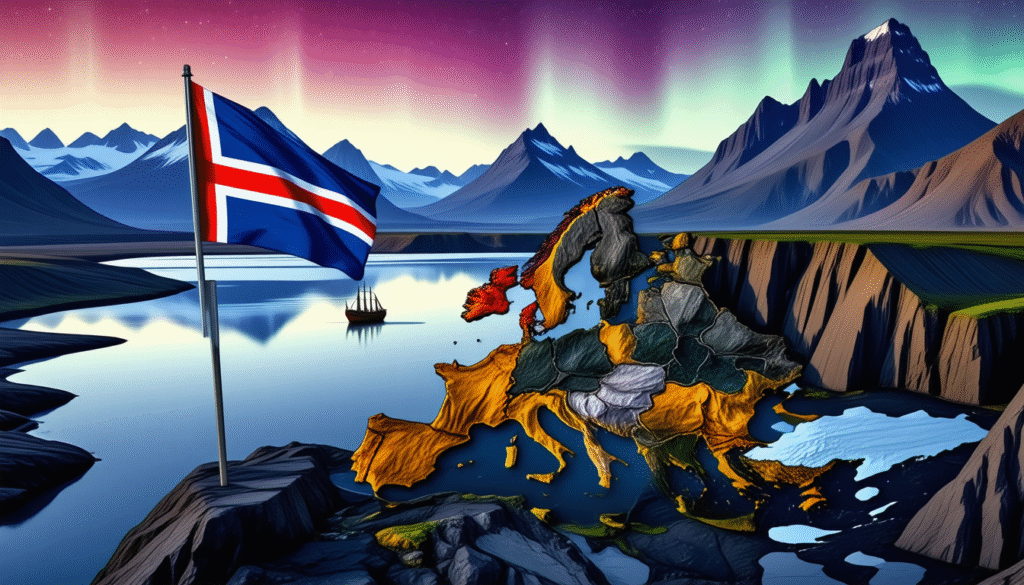
Despite its geographical proximity and strong cultural ties to Europe, Iceland remains intriguingly outside the European Union, a unique position that sparks curiosity amidst Nordic Politics and European Integration discussions. This island nation, famed for its rugged landscapes and volcanic activity, plays a delicate balancing act between maintaining national sovereignty and participating in broader European frameworks. Its relationship with the EU is deeply shaped by economic policy concerns, especially its prized fisheries sector, and a historic caution towards supranational entities. The ongoing debates around potentially joining the EU have intensified due to shifting global security dynamics and economic reshuffles, hinting at possible changes in Iceland’s stance in the near future. As of 2025, Iceland continues to navigate these complex waters, carefully weighing the benefits of integration against the costs to its autonomy, while engaging actively through agreements like the European Economic Area (EEA) and the Schengen Agreement.
Historical and Political Context Underpinning Iceland’s EU Non-Membership
Iceland’s journey towards or away from the EU cannot be understood without considering its robust legacy of independence and national sovereignty. Historically, Iceland declared independence from Denmark in 1944, a move fueled by a strong desire to govern internal affairs without external influence. This spirit of self-determination has since permeated its diplomatic and economic choices, notably in the context of EU Enlargement. While European countries can be enticed by the perks of unity—such as economic cooperation and political stability—Iceland retains a wariness rooted in its experience with Nordic Politics and a unique geopolitical position.
The Icelandic debate on EU membership reached a peak in the aftermath of the 2008 global financial crisis. Iceland’s banking system collapsed dramatically, shaking its economic foundations. For many Icelanders, aligning closer with the EU and potentially adopting the euro appeared to be a financial lifeline. Negotiations formally began in 2010 and made significant progress, with Reykjavik opening many accession chapters. However, by 2013, negotiations came to a halt as a newly elected right-wing government opposed joining, wary of losing control over key sectors.
Several political and economic factors contributed to this stance:
- National Sovereignty: Icelanders fear that EU membership would diminish their control over fisheries and agricultural policies, key to their economy and identity.
- Economic Policy: The eurozone crisis underscored the risks associated with surrendering monetary control, dampening enthusiasm to adopt the euro.
- Fisheries Policy: The fisheries sector regulates access to the valuable 200-mile economic zone, a resource that Iceland fiercely protects.
Moreover, Iceland’s active participation within the EEA provides access to significant parts of the EU internal market without ceding crucial legislative powers. This unique hybrid arrangement allows Iceland to benefit economically while maintaining the political freedom that joining the EU might compromise.
Thus, Iceland’s historical emphasis on independence, meshed with its political vision around national control, helps explain why it remains an EU outsider despite close cooperation and geographical proximity.
Economic Interplay Between Iceland and the EU Through the European Economic Area
While Iceland is not an EU member, its economic relationship with the bloc is intimate and multifaceted, primarily governed by the European Economic Area (EEA) Agreement since 1994. The EEA is a crucial framework that unites EU member states with three EFTA countries—Norway, Liechtenstein, and Iceland—into a single market, allowing for the free movement of goods, services, capital, and persons. This arrangement situates Iceland in a near-integrated economic zone, attending to many European integration criteria without full membership obligations.
Central to Iceland’s economic integration is the fact that its largest trade partners are within the EU, including Germany, Denmark, and Sweden. Icelandic businesses and citizens extensively benefit from this setup, with many working and studying across Europe. The EEA Agreement thus represents a cornerstone of Icelandic economic policy and foreign relations, allowing access to key markets and cooperation platforms such as environmental and competition regulations.
However, Iceland’s non-membership also means it can negotiate and decide independently on matters excluded from the EEA, like fisheries and agriculture. This selective participation is a double-edged sword:
- Advantages: Maintain protective control over fisheries, preserving a sustainable and lucrative sector.
- Limitations: Reduced influence on the formulation of EU legislation impacting the single market.
- Administrative Challenges: Icelandic authorities have noted delays in implementing EU legislation through the EEA framework, prompting reforms to improve this process.
Efforts have intensified to bolster Iceland’s influence within EU legislative processes by enhancing the capabilities of Icelandic diplomatic missions and ministries, particularly in Brussels. In 2018, Iceland adopted specific priority issues to safeguard its interests under the EEA framework, recognizing the need for efficient transposition of EU laws whilst preserving its economic niches.
This delicate equilibrium between integration and autonomy encapsulates Iceland’s pragmatic approach to European integration. By participating in the Schengen Agreement since 2001, Iceland also facilitates free movement with EU countries, supporting cultural and social ties despite the absence of political membership.
Fisheries Policy and Environmental Concerns Influencing Iceland’s EU Decision
The fisheries sector stands as one of the most defining elements in Iceland’s hesitation to join the EU. Representing a sizeable slice of the country’s GDP and export earnings, fisheries are closely monitored and managed by Icelandic authorities who pride themselves on sustainable and scientific stock management. The fear of losing control over this vital resource under the EU’s Common Fisheries Policy is a consistent theme in Icelandic political discourse.
Iceland’s exclusive rights to fish within its 200-mile economic zone are non-negotiable for many locals. Acceding to the EU would mean sharing these waters with fleets from Denmark, Spain, the Netherlands, and other EU member states, threatening the sustainability and profitability of the sector. This concern is compounded by Iceland’s cultural attachment to fishing, which forms part of its collective identity and way of life.
Additionally, Iceland’s position on commercial whaling distinguishes it from much of the EU. Despite international pressure and the EU’s general stance against whaling, Iceland permits regulated commercial whaling within its waters, fueling another point of divergence. The EU’s policies here clash with Icelandic sovereignty and environmental approaches, feeding into broader nationalist sentiments.
Environmental concerns also play a role, with Iceland actively engaged in Arctic environmental issues. The Arctic’s increasing geopolitical importance involves heightened activity by Russia and China, adding layers of security and environmental considerations. Iceland sees potential EU membership as both a protective mechanism and a potential challenge to its environmental autonomy, especially given the bloc’s stringent regulations.
- Key Fisheries Concerns: Preservation of exclusive fishing rights and avoidance of quota sharing.
- Cultural Implications: Retaining traditional fishing practices and local community livelihoods.
- Environmental Policies: Balancing EU standards with Iceland’s own environmental strategies, especially regarding the Arctic region.
The interplay between economic necessity, environmental stewardship, and cultural preservation shapes much of Iceland’s cautious stance toward the EU and remains a major hurdle in any future accession negotiations.
Security, Geopolitics, and the Future of Iceland-EU Relations
Recent global shifts have thrust Iceland’s strategic position into sharper focus, particularly relating to security cooperation and geopolitical alignments. As a NATO member without a standing army, Iceland relies heavily on external partnerships for defense. The United States historically provides defense guarantees via a bilateral agreement dating back to 1951. Despite US military downsizing since 2006, Iceland remains a pivotal part of North Atlantic defense strategies, hosting NATO exercises and infrastructure such as the former Keflavik air base.
Amid rising Arctic tensions, especially involving Russia and China, Iceland is reconsidering its engagement with European security frameworks. The prospect of a new security and defense partnership agreement with the EU is under negotiation, seeking enhanced cooperation on cyber threats and hybrid warfare. This is a salient development since Iceland lacks its own army and must navigate carefully between Western alliances and regional interests.
Moreover, tensions between the US and the EU, including ongoing trade disputes, contribute additional complexity to Iceland’s position. These transatlantic strains underline the importance Iceland places on maintaining sovereignty while securing beneficial relationships. Iceland advocates for consultation rights during EU-US trade talks but cannot expect influence without full EU membership.
Political winds in Reykjavik suggest an openness to revisiting EU accession negotiations by 2027, subject to a referendum reflecting public opinion. Polls indicate majority support for restarting dialogue, motivated by economic uncertainty and security concerns. Yet, decisive hesitations about complete membership remain, reflecting the tension between integration desires and protecting national autonomy.
- Strategic Security Concerns: Heightened Arctic geopolitical risks and cooperation needs.
- Defense Dependencies: Continued reliance on NATO support without a standing army.
- Prospective EU Security Partnership: Closer engagement on cyber and hybrid threats aligned with European frameworks.
- Public Opinion and Referendum Plans: A crucial upcoming vote scheduled before 2027 could redefine Iceland’s future relations.
The intersection of security necessities and sovereignty concerns will decisively shape Iceland’s evolving relationship with the EU and its role in Nordic Politics.
The Schengen Agreement and Iceland’s Hybrid Position in European Cooperation
Iceland’s involvement in the Schengen Agreement since 2001 exemplifies its hybrid approach to European engagement. By joining this visa-free travel area, Icelanders enjoy unrestricted movement across much of Europe, fostering tourism, education, and cross-border employment opportunities without the political commitments of full EU membership.
Participation in Schengen enhances Iceland’s connectivity while preserving its decision-making autonomy in other areas, particularly economic policy and fisheries. This arrangement reflects a pragmatic balance between European integration and protecting core national interests. Being part of Schengen also facilitates cooperation on security issues and border management, vital for this island nation strategically positioned between Europe and North America.
Nevertheless, Schengen membership doesn’t grant Iceland influence over EU-wide policy or legislation, which occasionally creates friction when security or immigration policies shift within the EU. Iceland must navigate these changes from an external standpoint, often adopting EU rules through the EEA Agreement without having formal voting rights.
- Enhanced Mobility Benefits: Free movement supports economic and cultural exchange.
- Security Collaboration: Shared efforts in managing border control and law enforcement.
- Limitations of Influence: Absence of political voice in Schengen policymaking bodies.
Iceland’s Schengen membership, coupled with EEA participation, reveals a clever model of partial integration designed to maximize benefits while guarding sovereignty, a hallmark of the country’s stance in Nordic Politics and European relations as 2025 unfolds.
Through these multifaceted avenues, Iceland continues to engage with Europe on its own terms, maintaining a dynamic but cautious stance on eventual EU accession. The ongoing debate is a fascinating case study in balancing economic opportunity, political freedom, and the cultural imperatives that define a small yet resilient nation.